Abstract
Various infections and autoimmune and reactive skin conditions can present with blisters of varying sizes. Some of these disorders are seen in everyday practice, whereas others are rarely encountered. In many cases, the clinical picture is so typical that the diagnosis is easy and obvious; nevertheless, the significant clinical overlap between many of these diseases can cause frustration in both unexperienced and expert clinicians. We present the most typical clinical clues and offer simplified algorithms to the clinical diagnosis of skin conditions with vesicles and bullae. We focus on several aspects, when assessing a patient with blisters on the skin: age of onset, a history of comorbidities and medications intake, the general condition of the patient, and most importantly, the distribution, number, size, morphology, and evolution of the blisters, the characteristics of the peribullous skin, and the presence of mucosal involvement. Emphasis is put on differentiating between potentially life-threatening blistering eruptions and more benign self-limiting conditions. © 2020 Elsevier Inc. All rights reserved.

Introduction
The plethora of conditions with blisters of different sizes on the skin is quite diverse and includes various infectious, autoimmune, and reactive skin conditions. Some of these disorders are seen in everyday practice, whereas others are rarely encountered. In many cases, the clinical picture is so typical that the diagnosis is easy and obvious; however, even the most experienced clinician sometimes faces a blistering skin eruption that is difficult to classify solely on clinical grounds. We present the most typical clinical clues and offer simplified algorithms to the clinical diagnosis of skin conditions with vesicles and bullae on the skin (Figure 1A-C). In developing this contribution, we soon realized that the words we used most often were “resembles,” “mimics,” and “similar to,” attesting to the significant clinical overlap between many of these diseases. This is most true with subepidermal autoimmune bullous dermatoses, but other stealthy imitators can cause confusion for even the most seasoned clinician.
Several aspects should be taken into consideration when assessing a patient with blisters on the skin.
- 1.
Knowledge of the most common age of onset for each disease is helpful, but exceptions are not sporadic. Bullous pemphigoid (BP), for example, is a disease of the elderly, but many cases of childhood BP have been described.
- 2.A detailed history, including thorough recording of comorbidities and medications intake, can be invaluable. Most reactive and autoimmune blistering skin conditions can be drug induced; the list of all possible offending medications would be almost impossibly long. Conditions like celiac disease and diabetes are associated with or more figuratively “possess” their own specific skin conditions—that is, dermatitis herpetiformis (DH) and bullosis diabeticorum (BD). As often witnessed in medicine, the simplest explanation is not necessarily the correct one—a child with celiac disease may have vesicular papular urticaria, resembling DH, and a patient with diabetes can suffer from localized pemphigoid on the legs, the most common predilection site of tense blisters of BD.
- 3.
The general condition of the patient should be taken into account. Fever is a strong indicator of infection, but it can also be a feature of severe reactive conditions like toxic epidermal necrolysis (TEN) and Stevens-Johnson syndrome (SJS), as well such autoimmune diseases as bullous systemic lupus erythematosus and pemphigus, but also rarely in relatively harmless conditions like polymorphic light eruption. Systemically ill and/or immunosuppressed patients are much more likely to develop more disseminated and potentially life-threatening variants of infections that are typically localized (eg, disseminated herpes infections).
- 4.
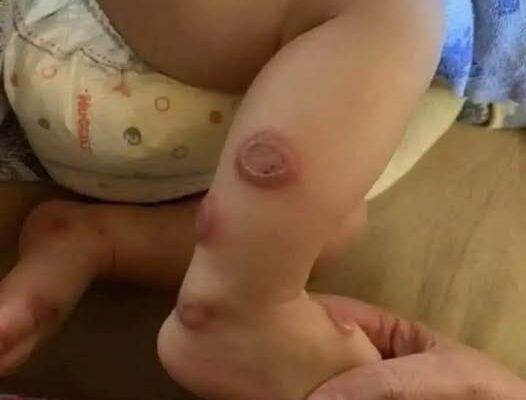
Most importantly, the distribution, number, size, morphology, and evolution of the blisters, the characteristics of the peribullous skin, and the presence of mucosal involvement can help narrow the number of differential diagnoses (Figure 1).
- 5.
Other skin clues can point the clinician in the right direction; for example, skin sclerosis and facial hypertrichosis in porphyria cutanea tarda can differentiate the condition from the classic mechanical form of epidermolysis bullosa acquisita.
Proper history and clinical evaluation are the keys to distinguishing potentially life-threatening bullous diseases from more trivial and self-limiting blistering conditions that do not pose any immediate danger or emergency. Certain conditions require prompt actions and sometimes empirical treatment before receiving unequivocal proof of the diagnosis. In any case, the history and clinical evaluation are pivotal in choosing the proper diagnostic tests. The hallmark of medical testing in bullous dermatoses is direct immunofluorescence, but numerous immunoserologic, microbiologic, and other laboratory studies can be crucial to the diagnosis. Rather than discuss these in detail, we shall focus on the clinical aspects.