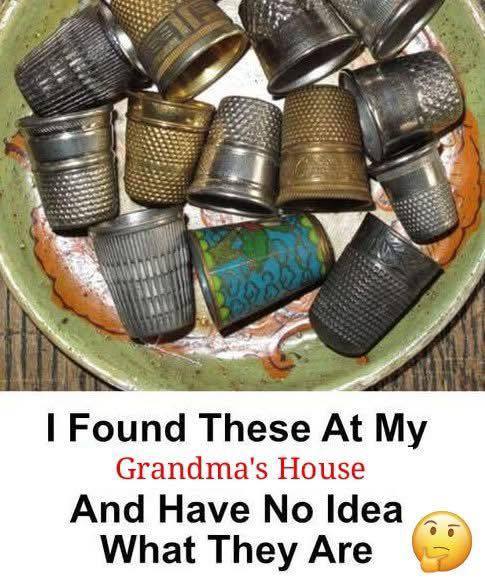
When sorting through a grandmother’s sewing basket or a glass-front cabinet filled with trinkets, you might stumble across a small metal or porcelain thimble and wonder why it was kept so carefully. To understand its quiet importance, you have to step back into a time when daily life looked very different.
Decades ago, clothing wasn’t disposable or replaced on a whim. People mended what they owned, sitting near a window or a lamp with fabric in their lap, stitching by hand. Before sewing machines became commonplace, a thimble wasn’t just a tool — it was protection. It shielded the finger that pushed the needle through layers of stubborn cloth, saving countless hands from pricks and punctures.

If you want to uncover the story behind a thimble you’ve found, start by studying the object closely. Its weight, material, and craftsmanship can speak volumes. Older thimbles were made from brass, silver, bone, or delicate porcelain, often reflecting the style, culture, and artistry of the era they came from. Beyond their practical purpose, thimbles also made their way into popular culture — appearing in theatre, literature, and children’s games — reminders of how familiar and beloved they once were.
These tiny objects may also hold sentimental value. Some were keepsakes collected during travels, others lovingly passed down through generations, and many exchanged as gifts that symbolized affection and care. Today, thimbles are celebrated in private collections and museums across the world — admired for their intricate patterns, engraved scenes, and hand-painted details. Learning about the maker or the period it came from can turn a simple sewing tool into a meaningful family heirloom.
What you do with the thimble now is entirely up to you. You might tuck it safely into a family sewing box, display it in a shadow frame, or simply share the story behind it so its history lives on. Whether it reminds you of someone’s patience, creativity, or quiet strength, a thimble carries more than just physical value.
In the end, the smallest objects often hold the deepest stories — if we pause long enough to listen.