
Attraction Across the Color Line: The Increasing Prevalence of Interracial Relationships Between White Women and Black Men. In an era where dating applications facilitate connections across geographical and cultural divides like never before, the prominence of interracial relationships—particularly those involving white women and Black men—has significantly increased. Once considered taboo in various regions of the United States, these unions have become more prevalent, prompting inquiries into attraction, culture, and societal evolution.
Data from the Pew Research Center reveals that interracial marriage has been on a steady rise over the last fifty years. In 1967, merely 3% of all marriages in the U.S. involved individuals of differing races or ethnicities. Currently, this percentage exceeds 17%, and among Black men who wed in 2021, around 24% had a spouse of a different race—predominantly white women.
What accounts for the significant rise in interracial couples where the male partner is Black and the female partner is white?
Dismantling Social Taboos
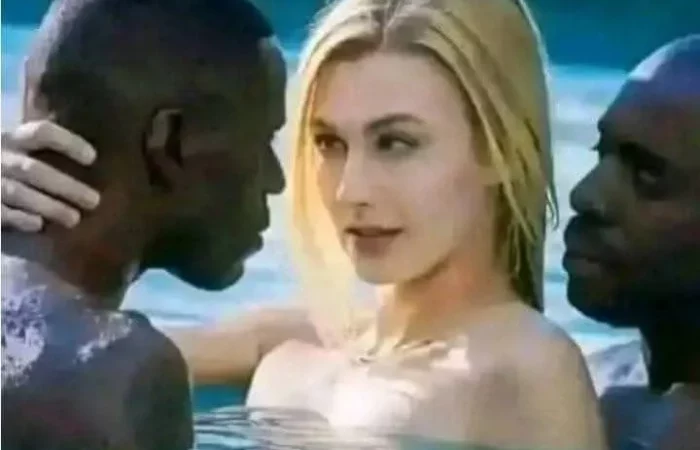
One reason is the gradual dismantling of racial taboos. In the relatively recent past, such relationships faced hostility or even legal repercussions in certain states across the U.S. The pivotal 1967 Supreme Court ruling in Loving v. Virginia legalized interracial marriage throughout the country, yet cultural resistance persisted for many years.
In contemporary society, younger generations are inclined to perceive race through a different perspective—less as a social impediment and more as an aspect of identity. “Millennials and Gen Z are maturing in increasingly diverse educational institutions, workplaces, and social circles,” states Dr. Amy Ellis, a sociologist at the University of Georgia. “Exposure fosters understanding, and understanding frequently leads to connections, including romantic ones.”
The Importance of Representation
The media also plays a significant role in influencing attraction. Over the last two decades, there has been an increase in the portrayal of Black men in mainstream entertainment as charismatic, confident, and appealing. From athletes such as LeBron James to entertainers like Michael B. Jordan, as well as characters in popular Netflix series, the romantic visibility of Black men has surged.
Simultaneously, social media has established a platform where individuals can openly celebrate interracial love. Hashtags such as #interraciallove and #blendedfamilies attract millions of views on platforms like TikTok and Instagram.
“These platforms have humanized what older generations might still perceive as controversial,” states culture critic Tenisha Hodge. “They have contributed to normalizing love that transcends racial boundaries.”
Attraction Versus Fetishization
However, it is crucial to recognize the difference between authentic attraction and fetishization. While many white women are attracted to Black men for their personality, values, humor, and shared interests, there exists a concerning trend of some women exoticizing Black men based on cultural myths or hypersexualized stereotypes.
“Fetishization reduces an individual to a collection of physical or racial characteristics,” cautions Dr. Reggie Banks, a psychologist specializing in interracial relationship dynamics. “It constitutes objectification rather than love.”
Dr. Banks further explains that while mutual attraction is a natural phenomenon, it becomes problematic when it is based on assumptions—such as the prevalent stereotype of Black men being more virile or dominant. “Such thinking dehumanizes both partners and can result in unhealthy relationship dynamics.”
Ongoing Challenges
In spite of increasing acceptance, interracial couples—particularly those involving Black males and white females—continue to encounter distinct challenges. Families, friends, or communities may exhibit less acceptance. Some partners must deal with cultural differences, microaggressions, or inquiries regarding their intentions. “People still gaze at us when we enter a restaurant together,” shares Lauren.
Love Without Borders
At its core, interracial attraction embodies a deeper human reality: love is intricate, and individuals are attracted to one another for a multitude of reasons—none of which can be solely attributed to race.
Instead of perpetuating stereotypes or reducing attraction to racial clichés, the contemporary phenomenon of interracial relationships signifies a more interconnected society—where cultural distinctions are increasingly blurred and love is, ideally, evaluated not by the hue of one’s skin but by the essence of one’s character. “It’s not about Black men or white women—it’s about individuals,” states Dr. Ellis. “And the more we keep that in mind, the closer we approach a community where love genuinely knows no limits.”