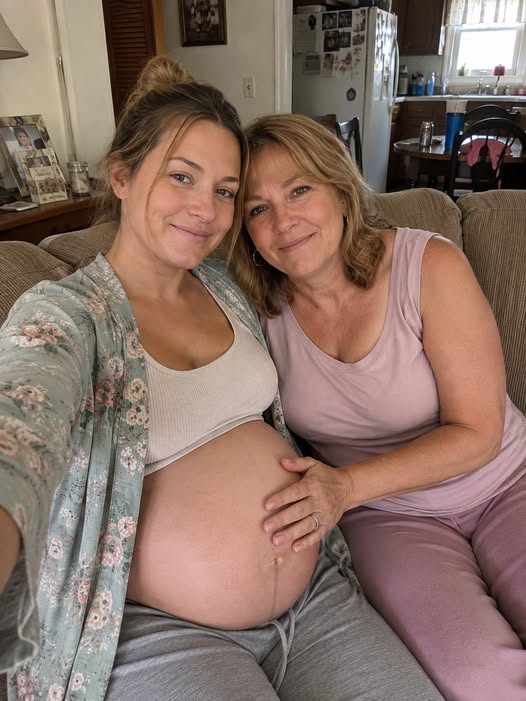

The first three years of my marriage to Chris were a study in the specific discomfort of being loved by someone whose mother had decided, before she had even learned your middle name, that you were insufficient.
Elaine was not cruel in any way that could be easily named. She did not say, you are not good enough for my son, in those words. She did not make scenes or issue ultimatums or behave in the theatrical way of the difficult mother-in-law that has been documented in a thousand different tellings. She was, if anything, more refined than that, and the refinement was part of what made her so effective.
She asked questions with the specific quality of someone who already knew the answer would disappoint.
She offered observations about my cooking, my housekeeping, my wardrobe, my career, and my opinions in the tone of someone who was genuinely puzzled by the choices I had made, as though my choices were mysteries she was generously willing to help me solve if only I could understand that they needed solving.
She spoke about Chris’s ex-girlfriend, a woman named Bethany who had apparently been, in Elaine’s estimation, a person of extraordinary quality, with the frequency and specificity of someone who wanted you to understand what she was comparing you to.
She had, over three years, made me feel like a tenant in my own marriage.
I want to be fair to myself about this: I tried. I genuinely tried to find common ground with Elaine, to understand her as a person rather than as an obstacle, to meet her where she was rather than where I needed her to be. I made her the tea she preferred. I asked about her friends and her garden and the book club she attended. I bought Christmas presents that demonstrated I had been paying attention. I drove three hours to her house for her birthday dinner even in the year when Chris could not make it because of work, and sat at her table and made conversation for four hours.
It was not enough.
I had come to accept, by the third year, that I would not be enough for Elaine, and that the marriage I had with Chris was real and good and not diminished by the fact that his mother preferred Bethany.
Then I got pregnant.
The announcement was a Sunday dinner at Elaine’s house, the kind she called casual and that required three days of preparation in her kitchen and a table set with the good linens. We had planned to tell her in a quiet moment before the meal, but the moment arrived during the soup course, which Chris thought was as good a time as any, and he reached across the table and took my hand and said that we had some news.
Elaine put down her spoon.
We told her.
I watched her face.
The specific thing that happened in Elaine’s face when we told her was not something I had a name for immediately, but that I thought about many times afterward. It was a reorganization, not simply of her expression but of something underneath it, as though the furniture of her interior life had shifted to accommodate something large. The calculation that had always been visible behind her politeness, the ongoing assessment of me as a candidate who had not quite met the criteria, seemed to momentarily go still.
And then she cried.
Elaine was not a woman who cried easily.
The tears arrived slowly, with the quality of something that had surprised even her, and she stood up from the table and came around to where I was sitting and she put her arms around me in a way she had never done in three years of knowing me, and she held on.
I did not know, in that moment, whether the shift was real.
I wanted it to be real.
I wanted to believe that the baby had accomplished what three years of trying could not, that Elaine had found in the fact of a grandchild the opening through which she could finally let me in.
And so I let down my guard.
I let her into our lives in the way that I had not been willing to let her in before, opened the doors that I had been keeping carefully latched. She brought food every week, the specific foods she knew I was craving, because she had started asking about the cravings with genuine curiosity rather than using the information to observe that her own pregnancies had been uncomplicated in that regard. She contributed to the nursery in ways that were generous and thoughtful and arrived without strings that I could identify.
She called to check on me with a frequency that had shifted from surveillance to care, or so it seemed.
I was thirty-four weeks pregnant when Chris left for the job site.
The project was a commercial development four hours north, a site visit that had been planned for months and that we had discussed without significant concern because thirty-four weeks was not thirty-seven weeks and we had, in the way of first-time parents, assumed that the week-by-week information we were receiving meant that thirty-seven weeks was the beginning of the window and thirty-four was firmly outside it.
We were wrong, as first-time parents frequently are.
I felt the shift at approximately twelve-thirty on a Thursday afternoon, that specific unmistakable sensation that no description quite captures because it is both more and less dramatic than you expect, and within ten minutes the contractions had begun in a way that moved me from possibility to certainty.
I called Chris.
He answered on the second ring and I could hear the ambient noise of the job site behind him, the vehicles and the equipment, and he said my name in the voice he used when he heard something in mine that required immediate attention.
I told him.
He said he was getting in the car.
We both knew he would not make it in time.
I said: call your mother.
He said: are you sure?
I said: call her.
He called her.
She arrived in twenty-three minutes.
Twenty-three minutes from the time Chris called her to the time she was at my front door, which required a kind of efficiency and focus that I had not previously associated with Elaine, who was in most things deliberate and considered. She arrived and she was calm in a way that I needed someone to be calm, because I was not calm, because I was thirty-four weeks pregnant and in active labor and my husband was four hours away on a highway and my body was making decisions without my input.
She helped me to her car.
She drove through the Thursday afternoon traffic with the focused certainty of someone who had decided that traffic was not a variable she was willing to negotiate with and who had apparently communicated this position to the universe effectively, because we moved through streets that I knew from experience should have taken longer.
She spoke to me in the car in the specific register of someone calibrating their voice to be calming, the register that does not pretend everything is fine but that holds steady enough for the frightened person to hold onto.
She handled the front desk at the hospital.
I have thought about this particular thing many times in the months since, the front desk. I was in no condition to handle the front desk. I was in the specific condition of a woman in active labor at thirty-four weeks who is trying to manage the gap between the contractions and the fear and the absence of the person she most wanted to have beside her, and Elaine took all of that away from me. She spoke to the intake staff with the efficient authority of someone who knew what she needed and was going to get it, and within what felt like minutes I was in a private delivery room with the fetal monitors attached and the pillow adjusted and Elaine beside the bed.
I kept checking my phone.
Chris had texted me three times. He was on the highway. He was pushing the speed limit in ways that he was not specifying. He said he loved me and he was coming.
I texted him that I was in the room and that his mother was with me and that I was okay.
He sent back a string of things that people send when words are not adequate.
I put my phone down.
The contractions were bad.
This is the only word I have for it, bad, which is an insufficient word for an experience that is both entirely within the range of what the body is designed to do and entirely outside the range of what any reasonable amount of preparation can make feel manageable. Elaine held my hand through two of them, which was not something I had ever imagined her doing, and she did it without saying anything useless, without telling me to breathe in a way that implied I was doing it wrong, without offering observations.
She just held my hand.
I was in the middle of the third contraction when the door opened.
A nurse came in.
I noticed her from the bed the way you notice movement when you are managing pain, which is peripherally and with the specific hope that the movement is the doctor or the anesthesiologist or anyone who is carrying something that will help.
She was a delivery nurse, in scrubs, with the composed efficiency of someone who has done this many times and who moves through delivery rooms with the economy of motion that experience produces.
She did not come to my bed.
I noticed this even through the contraction.
She walked past my bed.
She walked to Elaine.
She stopped in front of Elaine.
She gave a small, specific nod.
The nod was not for me. It was the nod of recognition, of two people who know each other, of something acknowledged between them.
And then the nurse reached into the pocket of her scrubs.
She took out something.
She handed it to Elaine.
Quietly. Directly. Without looking at me.
And my stomach dropped.
My stomach dropped with the specific cold of a person who is watching something happen that they cannot yet name but that their body has already understood, the cold of a situation that has just revealed a layer they did not know was there.
What the nurse handed Elaine was a phone.
A phone I did not recognize.
A phone in a dark case that I had never seen before.
Elaine took it without looking at me.
The nurse turned and went to my chart, pulling it from the slot at the end of the bed, the smooth redirect of someone returning to their professional task.
I said: Elaine.
She looked at me.
I said: whose phone is that?
She looked at the phone in her hand.
She said: it’s mine.
I said: I’ve never seen that phone.
She said: I have two phones.
She said it simply, without the defensive quality of someone who has been caught at something.
I said: why did she give it to you?
Elaine said: she was keeping it for me. I left it at the nurse’s station when we came in because I didn’t want it in the room. I wanted to be present with you.
She said: I asked them to hold it and bring it when someone had a moment.
I looked at the nurse.
The nurse looked up from my chart.
She said: she asked me to hold it when she came through the desk. She said she didn’t want to be distracted.
I looked at Elaine.
Elaine said: I have two phones because I’m still trying to understand the concept of a business phone and a personal phone. Chris set it up for me. I don’t entirely see the point of two phones but he thought it would help me manage things better.
She said: I left the personal one at the desk because it’s the one that doesn’t stop ringing and I didn’t want to be the woman on her phone while her daughter-in-law was having a baby.
She said: daughter-in-law. She said it naturally, without quotation marks, without the slight pause she had sometimes given it before.
I burst into tears.
Not the dignified kind.
The kind that arrives when you have been frightened and in pain and alone without the person you love most and have just spent thirty seconds believing something terrible about someone who was holding your hand through your contractions, and the belief turned out to be wrong, and the relief of its wrongness is bigger than you can contain.
Elaine moved to my side.
She said: what’s happening? Is it the pain?
I said, and I knew it was somewhat incoherent even as I was saying it: I thought you were, I thought the nurse was, I thought there was something you were hiding.
Elaine looked at me for a moment.
She said: from you.
I said: I’m sorry. I know. I’m sorry.
She said: no.
She sat on the edge of the chair beside my bed and she looked at me with an expression I had not seen from her before, or had not seen directed at me before, the specific expression of someone who is in the presence of something that is costing them something.
She said: I gave you every reason to think that.
I said: Elaine.
She said: I was unkind to you. For three years. I was unkind to you in ways that I convinced myself were reasonable, were in Chris’s interest, were about making sure he had the right person in his life. And none of that was true. I was unkind to you because you were the person who had his whole heart and I had shared his heart for thirty years with no one else and I didn’t know how to share it.
She said: that’s not an excuse. I’m not trying to excuse it.
I said: Elaine.
She said: and then you got pregnant. And I thought: this child is part of you. Which means part of you is part of my grandchild. And if I keep treating you the way I’ve been treating you, I’m going to spend the rest of my life watching my grandchild love a person I’ve been hurting.
She said: I couldn’t stand the thought of that.
The nurse had gone to the window with the absolute professional discretion of someone who has heard many things in delivery rooms and who understands that the delivery room is a place where certain things get said that would not get said anywhere else.
Another contraction came.
Elaine took my hand again.
She held it.
When it passed, she said: I wanted to be here today because I wanted to be here when your child was born. Not because it’s my grandchild. Because you are someone who has been carrying this for nine months alone in ways I should have seen and didn’t, and you called me today because Chris wasn’t there and I was the next option, and I want to be more than the next option.
She said: I want to be chosen.
I looked at her.
She said: I know I haven’t earned that yet.
I said: you drove twenty-three minutes.
She said: I broke a few traffic laws.
I said: you handled the front desk.
She said: I can be very authoritative when I need to be.
I said: you held my hand.
She said: I’m going to keep holding it.
The door opened.
Chris came through it.
He had, it became apparent, also broken several traffic laws, and he had the particular dishevelment of someone who has been in a car for four hours with the specific fear of arriving too late, and he came through the door and found me and crossed the room in a way that made the room feel like it had contracted.
He held me.
He said: I’m sorry, I’m sorry, I’m here.
I said: you made it.
He said: I wasn’t going to not make it.
He looked up and saw his mother.
Something passed between them, the specific communication of people who have known each other for thirty years, and what passed in that moment was something I did not entirely understand, because it was old and layered and about things that predated me.
But I saw his face.
He said: Mom.
She said: she did beautifully.
He said: I know she did.
He looked at me.
He said: are you okay?
I said: I’m going to be.
He looked at his mother again.
He said: thank you.
She said: she called me.
He said: I know.
She said: she didn’t have to.
He said: she did the right thing.
She said: yes. She did.
The doctor arrived twenty minutes after Chris, and what followed was the specific extended chaos and focus and terror and wonder of a baby being born six weeks early with the particular speed of a baby who had made a decision and was not going to be talked out of it.
Our daughter arrived at four-forty-seven in the afternoon.
She was small. She was furious. She had Chris’s eyes and what I was fairly certain was my expression of general impatience with circumstances that were not moving fast enough, which she demonstrated within the first thirty seconds of being in the world by making her position on the situation entirely clear.
She was placed on my chest.
She was warm and real and wholly herself, this person who had been theoretical for eight months and was now irrefutably present, and I looked at her and felt what people say you feel and what no description I have ever read has adequately captured.
Chris was beside me.
His hand was on both of us.
Elaine was at the edge of the room.
I looked at her.
She was watching the three of us with an expression that I will keep, that I have kept, that I think I will keep for the rest of my life, because it was the expression of a woman who was seeing something she had been afraid she would not get to see, and who was seeing it because someone she had not been kind to had called her when she needed help.
I said: Elaine.
She looked at me.
I said: come meet your granddaughter.
She came to the bedside.
She looked at the baby.
The baby looked at her, which is not quite what happens with newborns, who are not yet looking at anything in the focused way, but which is what it felt like, the specific sense of two people encountering each other for the first time.
Elaine put one finger against the baby’s hand.
The baby gripped it.
The newborn grip, the involuntary reflex, but it looked like intention.
Elaine made a sound that was not a word.
The baby held on.
We named her Ruth.
Not named for anyone specific, though we went back and forth about this, considered and rejected names from various parts of our families, and in the end arrived at Ruth because it was a name that felt like itself, not a tribute and not a placeholder, just a name that suited the specific small person who had arrived with such urgency and certainty.
Ruth was in the NICU for eleven days.
Eleven days is a particular kind of time, the kind that passes both too slowly and too quickly, the kind that is measured not in dates but in weights and readings and the specific vocabulary of a premature baby’s progress, the grams gained and the oxygen levels and the milestones that were not the milestones of a full-term baby but were their own kind of significant.
Elaine was at the hospital every day.
I want to be careful about how I describe this, because the care is important. She did not take over. She did not insert herself in ways that displaced Chris or me or the medical staff or the space that the three of us needed to be finding ourselves as a new family. She was present in the way of someone who has decided that her job is to be available rather than to be central, to fill in where she is needed and step back where she is not.
She brought food.
Not just for us but for the NICU staff, the specific practical generosity of someone who had learned that the people caring for her granddaughter worked long shifts and that food was a way of saying thank you that did not require them to stop what they were doing.
She held Ruth when I needed to sleep.
She learned the specific way Ruth liked to be held, slightly tilted, with the pressure point at the base of her skull that calmed her, and she held her that way in the chair beside the incubator for hours without apparent discomfort.
She called Chris once a day, just to hear his voice, she said, just to check in, the natural maintenance of a mother and a son, and she did not ask him to report to her or to manage her anxiety or to make her feel better about the situation. She just called and talked for a few minutes and said she would see us tomorrow.
Ruth came home on a Saturday.
The first night home, Chris and I were in the bedroom with the bassinet beside the bed, and Ruth was doing what Ruth did, which was make the specific sounds of a baby who was newly home and had opinions about the transition, and at two in the morning my phone lit up with a text from Elaine.
The text said: I know you’re awake. If you need anything, I’m awake too.
I texted back: we’re okay. She’s just adjusting.
Elaine wrote: she’ll adjust. She’s stubborn like her mother.
I put the phone down.
I said to Chris: did your mother just call me stubborn as a compliment?
He said, from the pillow: she did that with me too. Took thirty years.
I looked at the ceiling.
I said: I think she likes me.
He said: I think she does.
Ruth made a sound.
I got up.
At three weeks postpartum, Elaine came over on a Tuesday afternoon.
I want to tell you about this particular Tuesday because it is where I understood something about what had happened, not the birth or the NICU or the three years before any of it, but the whole arc of the thing, what it meant and what it had been.
She arrived with food, because she always arrived with food, and she sat at my kitchen table while I fed Ruth and we talked, the kind of talking that happens between two people who are still finding the grammar of their relationship, testing sentences to see how they land.
At some point, in a gap in the conversation, she said: I’ve been thinking about something.
I said: what?
She said: the day Ruth was born. When you saw the nurse hand me the phone.
I had not brought it up again. I had told Chris later, quietly, what I had thought in that moment, and he had held me and said he understood why I had thought it, and we had left it at that.
She said: I could see your face.
I said: Elaine.
She said: what you thought. What you were afraid it was.
I said: you don’t need to.
She said: I want to. Because I need you to understand that you were not unreasonable. Three years of the way I treated you, and something out of context happens, and your mind went somewhere dark. That’s not paranoia. That’s cause and effect.
I said: it passed. I knew almost immediately I was wrong.
She said: but it was there.
I said: yes.
She said: it should never have been able to be there.
She was quiet for a moment.
She said: I think about Bethany sometimes. I know I mentioned her too much. Too specifically. In front of you.
I said: you did.
She said: Bethany was a perfectly nice young woman and she and Chris were entirely wrong for each other and even I knew that, but I used her as a weapon.
I said: yes.
She said: that was cruel.
I said: it was.
She said: I’m sorry.
I looked at her.
She said: I have been sorry for longer than I’ve been able to say it. I’m saying it now.
I said: I hear you.
She said: I don’t expect it to undo anything.
I said: it doesn’t undo it.
She said: I know.
I said: but it helps.
She looked at Ruth.
She said: she’s going to know a different version of me.
I said: yes.
She said: I’d like you to know that version too. If you’re willing.
I looked at the woman across my kitchen table, the woman who had spent three years making me feel insufficient and who had driven twenty-three minutes to take me to the hospital and had left her phone at the nurse’s station because she didn’t want to be distracted, who had held my hand through contractions and said I want to be chosen and who brought food every time she came because food was how she showed up when she did not yet trust that she had other things to offer.
I said: I’m willing.
She said: okay.
She said: good.
She looked at Ruth again.
She said: she has my nose.
I said: she has Chris’s eyes.
She said: both can be true.
I said: both can be true.
Ruth made a sound.
I adjusted her.
She settled.
Elaine watched this with the expression of a grandmother watching a granddaughter in the arms of her mother, and in it were all the things that had accumulated over the years and all the things that might still be possible, the cost and the hope of it together.
The nurse’s phone.
I have thought about the nurse’s phone many times since that afternoon in the delivery room. I have thought about it because of what it revealed about me, not about Elaine. The thirty-second drop of my stomach, the cold certainty of something wrong, the mind running to the darkest version of the evidence. Three years had prepared me, in a specific way, to see betrayal in ambiguous evidence. Three years had made the worst interpretation feel more credible than the innocent one.
This is not a fault I am particularly hard on myself about.
It is cause and effect, as Elaine said.
But I think about it because of what it means about how we read people, how we read situations, how the accumulation of our history with someone shapes what we see when something happens that could be read more than one way. I had been given, by three years, a particular lens, and the lens bent the light.
The innocent explanation was that she had left her phone at the nurse’s desk because she wanted to be present.
The innocent explanation was that a nurse was returning a phone to its owner.
The innocent explanation was that Elaine, who had spent three years being unkind to me in ways I understood as strategic and calculated, had also spent the last eight months changing in ways that were real, and had driven twenty-three minutes and held my hand through contractions and called me her daughter-in-law without the pause she used to give it.
Both things were true.
The unkindness and the change.
The history and the nurse’s phone.
The thirty-second terror and the relief.
The three years and the afternoon that followed them.
This is what I have come to understand, in the months since Ruth was born, which is that people are not the best thing they have ever done and they are not the worst. They are the whole accumulation, and the accumulation is in motion, and reading someone means reading all of it, including the things they are still becoming.
Elaine was still becoming someone different.
She is still becoming.
Ruth is six months old now.
She has Elaine’s nose and Chris’s eyes and my impatience with circumstances that are not moving fast enough, and she has the specific quality of a person who was born in a hurry and has not yet decided to slow down.
She knows Elaine’s face.
She reaches for her.
Elaine comes on Tuesday afternoons and she holds Ruth and she and I sit at the kitchen table and talk, the kind of talking that is slowly building something, the grammar still developing but becoming more fluent.
She has never mentioned Bethany again.
She has mentioned, on two occasions, things she has noticed about me that she said she should have said earlier, compliments that were specific enough to be real, that required observation to make. The way I think through problems before I speak. The patience I have with Ruth during the long nights that she knows about from Chris. The way I had handled the three years without ever making Chris choose, which she said took more strength than she had given me credit for.
I said: you were watching.
She said: I was always watching. I just wasn’t seeing what I was looking at.
I said: what changed?
She said: the pregnancy changed something. And then the hospital changed something else. And then I saw your face when you thought the phone was something to worry about, and I realized that I had given you that face. I had given you the thing that made that thought possible.
She said: I didn’t want to be the thing that made that thought possible. Not for you. Not for her.
She looked at Ruth.
She said: I want to be the thing that makes other thoughts possible.
I said: you are.
She looked at me.
She said: am I?
I said: you’re getting there.
She almost smiled.
She said: okay.
She said: I’ll take that.
The tulips in the backyard are in bloom.
This has nothing to do with anything except that they are beautiful and I am looking at them from the kitchen window where I am writing this and Ruth is asleep in the next room and Chris is at work and Elaine will be here at two, and the house is quiet in the specific way of houses that contain a sleeping baby, which is to say completely and temporarily.
I think about what the last six months have been.
I think about what the three years before them were.
I think about the nurse’s phone, the thirty-second drop, the cold and then the relief.
I think about Elaine saying I want to be chosen.
I think about Ruth gripping her finger the first time she held her, the involuntary reflex that looked like intention, the small hand holding on.
I do not have a clean summary.
I do not think the story has one.
What I have is a marriage that is good and a daughter who arrived six weeks early with enormous opinions about the world and a mother-in-law who is becoming someone different than the woman she was when I met her, slowly and imperfectly and with the specific difficulty of someone who is working against a long habit of herself.
And I have the Tuesday afternoons.
And the food she always brings.
And the way she holds Ruth, the specific tilt, the pressure point at the base of the skull.
She figured that out herself.
She paid attention until she knew.
That is, I think, the whole of it.
Not forgiveness as a finished thing, not trust as a completed return to some prior state, not a story where someone is fully redeemed and all the damage is repaired.
Just two women at a kitchen table, and a baby who reaches for her grandmother, and the tulips in bloom in the yard, and the Tuesday afternoons that are building something slow and real from the material of what was and what might still be.
Ruth wakes up.
I go to her.
She looks up at me with Chris’s eyes and Elaine’s nose and whatever is hers, the thing that is entirely new, the thing that neither of us gave her and that she arrived with.
She reaches for my face.
I let her take it.