My name is Thea Lawson, and I was thirty-one when my grandmother passed away. Three weeks after her funeral, my mother looked me straight in the eye during the reading of Grandma Eleanor’s will and said, “You were always her least favorite.” She said it in front of fourteen people without the slightest hint of regret, as if humiliating me was simply another family tradition.
I had spent my entire life feeling like an outsider in my own home. My father, Richard Lawson, owned a successful commercial real estate company in Westport, Connecticut, while my mother, Diane, devoted herself to maintaining the family’s polished image. My older brother Brandon was the pride of the household, the son everyone admired and the future heir everyone celebrated.
Brandon entered the family business immediately after college and quickly became the center of every conversation. Every holiday meal revolved around his latest achievements, the deals he had closed, and the future everyone believed belonged to him. I chose a different path, becoming a third-grade public school teacher because I genuinely loved helping children learn.
My parents never respected that choice. Whenever relatives asked about my career, my mother answered before I could speak. “She teaches third grade,” she would say with a dismissive smile. “It’s sweet.” Moments later, she would shift the conversation toward Brandon’s newest business success, making it clear whose accomplishments truly mattered.
Only one person in my family never made me feel invisible. My grandmother, Eleanor, celebrated every small victory in my life and never allowed anyone to convince me that kindness was less valuable than money. She often reminded me, “Money shows you who people really are.”
The difference between how she treated Brandon and how she treated me became especially clear on my thirtieth birthday. I invited my parents and Brandon to a small dinner at my apartment after spending days preparing everything myself. My father and Brandon skipped the dinner because of a golf tournament, while my mother arrived two hours late, handed me fifty dollars inside a greeting card, and left before dessert.
Later I learned that Brandon had received an expensive Rolex to celebrate his promotion. Meanwhile, the happiest part of my birthday had come hours earlier when Grandma called to sing an off-key version of Happy Birthday before laughing at herself. After finishing the song, she told me, “You are the best thing this family ever produced, and they’re too blind to see it.”
She also mailed me a tin of her famous homemade cookies with a handwritten note tucked inside. It read, “Keep being you. The world needs more Theas.” At the time, I treasured those words without realizing how important they would eventually become.
Several months later, my father called unexpectedly late one Wednesday night. His voice sounded strangely detached as he told me, “Your grandmother passed away in her sleep.” I barely remember the ninety-minute drive to Westport because my thoughts never stopped racing.
When I arrived at Grandma’s house, every light was on, yet the atmosphere felt strangely cold. No one hugged me or offered any comfort. My mother simply looked up and said, “The funeral home is coming at eight.”
I ignored everyone downstairs and went directly to Grandma’s bedroom. She looked peaceful, and I sat beside her bed holding her hand while memories flooded back. Downstairs, instead of mourning her loss, I could hear my parents speaking in hushed voices about practical matters. Even then, something about their conversation felt wrong.
The funeral took place three days later. Although I wanted to deliver Grandma’s eulogy, my mother refused and insisted Brandon would speak instead because, according to her, “He’s better with crowds.” Brandon delivered a polite but empty speech that mentioned almost nothing about the woman I knew.
After the service, I returned to Grandma’s house and found my mother already sorting through jewelry and personal belongings. When I asked why she was doing it so quickly, she simply replied that she was “organizing everything before the estate process,” as though packing away a lifetime required no pause for grief.
Outside, Grandma’s longtime neighbor Maggie Holt quietly approached me. She squeezed my hand and said, “Your grandmother talked about you every single day.” Then she lowered her voice and added, “She was smarter than all of them. Remember that.”
Five days later, I called my father to ask about Grandma’s will. Each time I asked whether I had been included, he refused to answer directly. “We’ll discuss it at the reading,” was all he would say before ending the conversation.
Brandon wasn’t much more helpful. He claimed he didn’t know the details, but I could hear hesitation in his voice. He knew more than he admitted, yet he chose to remain silent.
That night I began researching Connecticut probate law because something no longer felt right. While reading about wills and estate disputes, I discovered how important timing could be if a document had been altered. Before I finished researching, an unfamiliar cream-colored envelope arrived from a law firm I had never heard of.
The letter invited me to attend the same will reading my family had already scheduled, but it described the meeting as a “separate matter” involving Grandma Eleanor’s estate. I didn’t understand what it meant, but instinct told me the invitation mattered.
The night before the reading, I couldn’t sleep. I kept thinking about my final visit with Grandma just two weeks before she passed away. As I prepared to leave that afternoon, she had squeezed my hand and quietly said, “Whatever happens, you’re taken care of. Do you understand?”
At the time, I believed she was simply comforting me. I had no idea she was talking about something much bigger.
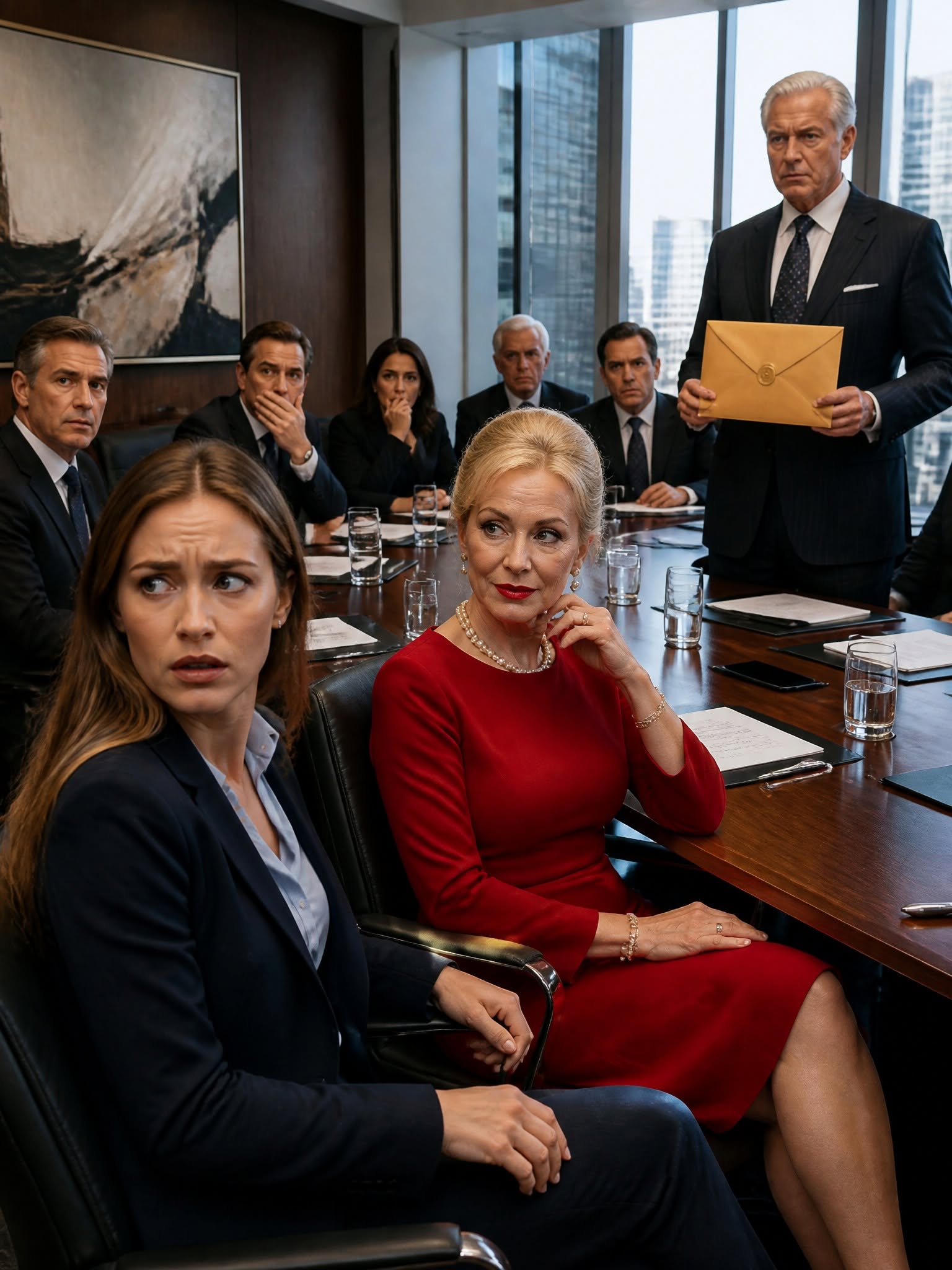
The following morning I arrived early at Alan Mitchell’s law office. My parents, Brandon, several relatives, close family friends, and Grandma’s longtime neighbor Maggie were already seated around the conference table. In the far corner sat an elderly silver-haired attorney I had never met before, holding a sealed brown envelope without saying a single word.
Alan Mitchell began reading Grandma’s will. One by one, he distributed the estate: the family home went to my father, the investment accounts to Brandon, and the remaining assets to my mother. I listened carefully, waiting to hear my name.
It never came.
When the reading ended, my mother looked directly at me with complete satisfaction and said, “You were always her least favorite.”
I stayed calm and simply replied, “I’m listening.”
As the room fell silent, another attorney slowly stood up from the corner, placed a second sealed envelope on the table, and introduced himself.
“My name is Harold Kesler,” he said quietly. “Your grandmother retained me seven years ago for a separate legal matter.”
The room instantly changed. No one knew what was inside the envelope, but everyone understood that Grandma’s story wasn’t over yet.
Part 2: The Envelope Grandma Prepared Seven Years Earlier
The room remained silent after Harold Kesler introduced himself. My parents exchanged uneasy glances, while Alan Mitchell quietly confirmed that Grandma had personally instructed him to allow Kesler to speak after the will had been read. Whatever was inside the second envelope, it had been part of Eleanor Lawson’s plan all along.
My mother leaned forward, unable to hide her irritation. “Alan, what is this?” she demanded.
Mitchell answered calmly. “Mrs. Lawson, these instructions came directly from Eleanor. They were signed, notarized, and legally binding. Mr. Kesler is here because your mother specifically requested it.”
Without responding to anyone else, Kesler carefully opened the envelope and placed two documents on the table. The conference room became so quiet that the ticking clock on the wall suddenly sounded impossibly loud. Every person present watched him, realizing that the meeting was far from over.
Kesler adjusted his glasses before speaking.
“My name is Harold Kesler, senior partner at Kesler & Webb. Seven years ago, Eleanor Lawson retained our firm to establish a completely separate legal arrangement. What I am about to present has never been part of the probate estate or the will that has just been read.”
My father frowned immediately.
“I’ve never heard of your firm.”
“That was intentional,” Kesler replied. “Your mother wanted this matter kept entirely confidential.”
As he spoke, memories I hadn’t thought about in years suddenly resurfaced. Four years before Grandma died, I had found her reviewing stacks of legal documents at her kitchen table. When I asked what she was doing, she smiled and answered, “Insurance against greed.” At the time, I assumed she was joking. Now I realized she had been completely serious.
I also remembered the small locked wooden box she always kept hidden on the top shelf of her bedroom closet. When I asked what it contained, she simply smiled and said, “That’s where I keep the things that matter most.” Sitting in that conference room, I finally understood that every mysterious moment from those years had been connected.
Kesler held up the first document.
“This is a certified copy of an irrevocable trust established by Eleanor Grace Lawson seven years ago. At the time it was signed, she completed an independent medical evaluation confirming she was mentally competent and fully understood every provision.”
My mother interrupted immediately.
“What does that have to do with this estate?”
“It means,” Kesler answered evenly, “that this trust exists entirely outside the will Mr. Mitchell has just read. It has its own assets, its own administration, and its own beneficiary.”
My father leaned forward.
“My mother never mentioned any trust.”
“She wasn’t required to,” Kesler replied.
The room became perfectly still. Brandon finally broke the silence.
“Who’s the beneficiary?”
Instead of answering immediately, Kesler turned toward me. He looked directly into my eyes before speaking with absolute certainty.
“The sole beneficiary of Eleanor Lawson’s irrevocable trust is Thea Eleanor Lawson.”
Nobody moved.
My mother stared at him in disbelief while my father remained frozen. Brandon looked from Kesler to me as though trying to convince himself he had misunderstood what he had just heard.
Finally, my mother whispered, “How much?”
Kesler calmly turned another page.
“The current value of the trust is approximately eleven million four hundred thousand dollars.”
The words seemed to drain every ounce of air from the room.
My mother collapsed back into her chair, barely catching herself before falling completely. My father gripped the back of his chair so tightly that his knuckles turned white.
“That isn’t possible,” he said quietly.
Brandon stood so abruptly that his chair scraped loudly across the floor.
“Eleven million?” he repeated. “She left eleven million dollars to Thea?”
Around the table, everyone reacted differently. Some stared at me in disbelief. Others looked toward my parents, suddenly realizing the inheritance they had celebrated only minutes earlier was insignificant compared to what Grandma had secretly protected.
My mother recovered first.
“This is fraud,” she insisted. “She was elderly. She couldn’t possibly have understood what she was signing.”
Kesler simply placed another document on the table.
“This is her medical competency evaluation conducted by an independent physician. Eleanor was fully competent when she established the trust, and every legal requirement was satisfied.”
“We’ll challenge it,” my mother snapped.
“You’re free to consult any attorney you wish,” Kesler replied, “but irrevocable trusts are not subject to challenges from family members who were never beneficiaries.”
Alan Mitchell quietly nodded.
“He’s correct.”
Brandon looked completely lost.
“This isn’t fair,” he muttered.
I finally spoke.
“You just inherited eight hundred thousand dollars, Brandon.”
He looked back at me.
“That’s not the point.”
“Then what is?”
For the first time in years, Brandon had no answer.
Sensing that anger was getting her nowhere, my mother instantly changed tactics. Her expression softened, tears suddenly filled her eyes, and she reached across the table toward me.
“Thea, sweetheart,” she said gently. “We’re family. Your grandmother would have wanted us to share.”
I looked at her outstretched hand but made no attempt to take it.
“Grandma wanted exactly what she put in writing,” I replied. “She had seven years to change her mind. She never did.”
My father spoke next, his voice cold and controlled.
“Someone manipulated her.”
Kesler answered before I could.
“I knew Eleanor Lawson for twenty-two years. No one manipulated Eleanor into doing anything.”
Grandma’s longtime friend Maggie quietly added, “He’s right. Eleanor knew exactly what she was doing.”
My father turned toward her.
“This doesn’t concern you.”
“Yes, it does,” Maggie replied firmly. “Eleanor asked me to witness today because she expected this conversation.”
Those words changed the atmosphere once again. Everyone finally realized that Grandma hadn’t simply created a trust. She had carefully planned every step that would follow, including who would be sitting in that room when the truth was finally revealed.

Part 3: Grandma Had Seen This Day Coming
The room remained silent long after Harold Kesler revealed the trust. My parents were still trying to process what they had heard, while Brandon stared at the paperwork as though another page might somehow erase the previous one. I simply sat there thinking about Grandma’s final words to me. Whatever happens, you’re taken care of. For the first time, I understood she hadn’t been comforting me. She had been preparing me.
Harold reached into his briefcase once more and removed a sealed handwritten letter. “Eleanor instructed me to deliver this only after the trust was disclosed,” he explained. “She also specified that it be read aloud in front of everyone present.”
My mother immediately objected.
“This has gone far enough.”
“No,” Harold replied calmly. “According to your mother, it hasn’t.”
He unfolded the letter carefully and began reading.
“If this letter is being opened, then my family has already learned about the trust. I suspect some people in this room are angry, confused, or looking for someone to blame. If that’s true, let me save you some time. The decision was mine alone.”
Nobody interrupted him.
“For years I watched how each of you treated Thea. I watched birthdays forgotten, achievements dismissed, and kindness mistaken for weakness. I also watched people assume that because she never demanded attention, she deserved less of it. They were wrong.”
My mother lowered her eyes for the first time that afternoon.
Harold continued reading.
“Richard and Diane, you spent years convincing yourselves that Brandon needed more because he carried the family business. You forgot that character is worth more than profit. One child received praise every time he succeeded. The other received excuses every time she was overlooked.”
My father shifted uncomfortably in his chair but said nothing.
“Brandon, this isn’t a punishment. I love you, but I watched your parents rescue you from every mistake while expecting your sister to solve every problem without help. That kind of love doesn’t strengthen a person. It weakens them.”
Brandon’s face reddened as he stared at the table.
Then Harold reached the final pages.
“Thea never asked me for money. She never asked me for a larger inheritance. She only visited because she loved me. She brought groceries when I was sick, fixed my garden fence without telling anyone, drove me to doctor’s appointments, and stayed long after everyone else had gone home. She gave me her time, and time is the only gift you can never repay.”
By the time Harold finished reading, tears were running down my face. They weren’t tears because of the money. They came from hearing someone finally say out loud what I had spent my entire life pretending didn’t hurt.
My mother suddenly stood.
“Thea… we didn’t know you felt this way.”
I looked at her quietly.
“You never asked.”
My father finally spoke.
“We made mistakes.”
“Yes,” I answered. “You did.”
He waited for me to say something more, but there was nothing left to add.
Brandon slowly pushed his chair back.
“I honestly didn’t think things were that different between us.”
I couldn’t stop myself from giving a small, tired smile.
“That,” I said softly, “is exactly the problem. You never noticed.”
No one argued after that.
Harold gathered the legal documents while Alan Mitchell confirmed that every transfer required by the trust had already been completed years earlier. There was nothing to contest, nothing to delay, and no legal path that could undo Eleanor’s decision. She had planned every detail with extraordinary care, making certain her final wishes would survive any challenge.
Over the following weeks, my parents called repeatedly. At first they wanted to discuss the trust, then they wanted to “clear up misunderstandings,” and finally they simply asked if we could spend time together. For the first time in my life, the conversations weren’t about fixing Brandon’s latest problem or asking me to be more understanding. They were about me.
I answered some calls and ignored others.
Healing, I discovered, couldn’t be scheduled simply because people suddenly regretted the past.
Several months later, I used a small portion of the trust to establish the Eleanor Lawson Classroom Grant, providing books, technology, and classroom supplies for public school teachers throughout our county. Grandma had always believed that investing in children created the greatest return, and it felt right that her legacy would continue helping students long after both of us were gone.
On the day the first grants were awarded, Maggie stood beside me during the ceremony.
“She’d be proud of you,” she whispered.
I smiled.
“She already was.”
That meant more than the inheritance ever could.
A year later, I visited Grandma’s grave carrying fresh lilies from her favorite garden center. I sat beside the headstone and quietly thanked her, not for the money she had left behind, but for believing in me long before I believed in myself.
She hadn’t left me the largest gift because I was her favorite.
She left it because she knew that one day I would finally need proof that I had never been the least loved after all.