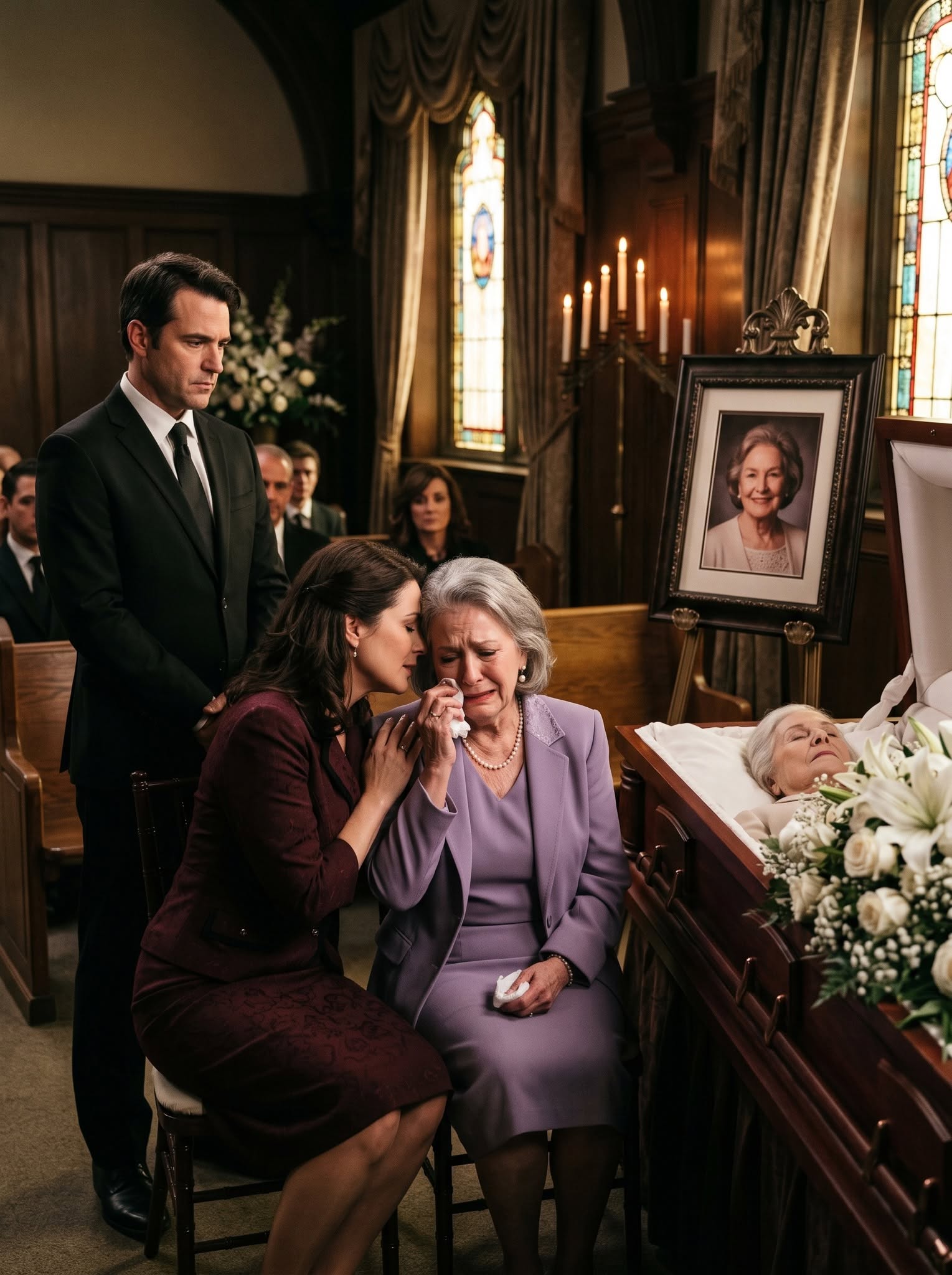
“At my daughter’s funeral, my son-in-law’s mistress walked up wearing the bracelet I had given my daughter when my granddaughter was born and whispered, “I won.” She thought Katherine’s death had cleared the way for her future—until a lawyer arrived with a will, a sealed letter, and a piece of evidence my daughter had prepared before she died.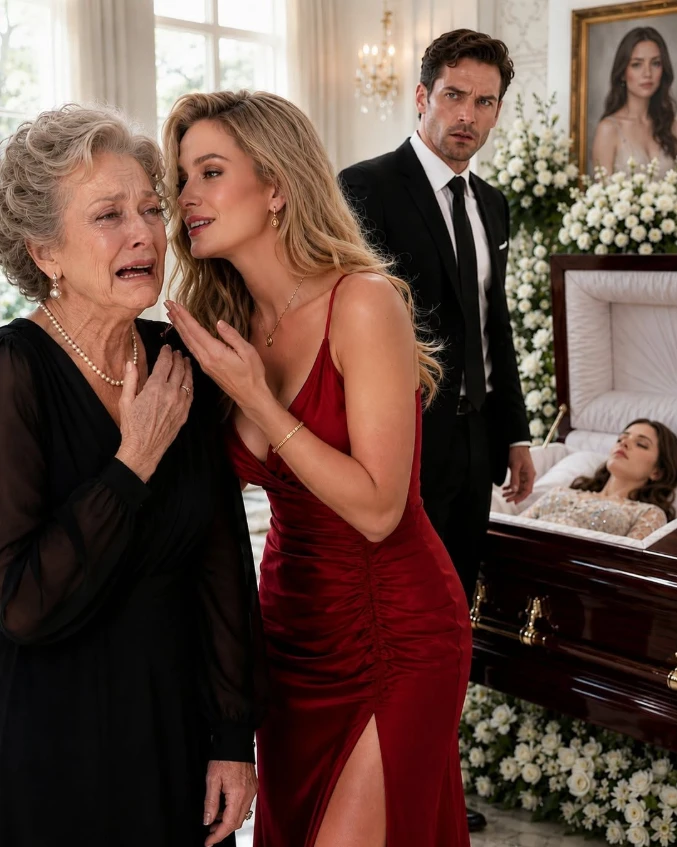
My daughter, Katherine, was only thirty-two.
She had built a thriving design business in Phoenix, paid for her home with years of hard work, and devoted herself to raising her four-year-old daughter, Tanya.
Now she lay inside a coffin surrounded by white roses.
Bradley, her husband, had chosen them because they would “look elegant in the photos.”
The thought made my stomach turn.
Katherine loved sunflowers.
The moment Bradley entered the funeral home, something felt wrong. His shirt was immaculate. His posture was relaxed. Not a single tear stained his face.
He didn’t look like a grieving husband.
He looked like a man waiting for a transaction to be completed.
I was holding Tanya, exhausted from crying herself to sleep, when I noticed the bracelet on Heather’s wrist.
My bracelet.
Katherine’s bracelet.
I stared at it. “That belonged to my daughter.”
Heather barely glanced at me.
“This isn’t the time to cause a scene, Mrs. Florence.”
Then she leaned in, brushed a fake kiss against my cheek, and whispered, “I won.”
Every muscle in my body tightened.
But Tanya was asleep against my shoulder.
So I stayed silent.
Instead, I remembered Katherine’s final phone call.
“Mom, if anything happens to me, don’t believe Bradley.”
I had tried to calm her down. Her marriage had been falling apart, and I thought stress was getting the better of her.
Then her voice dropped.
“I hid something. I can’t explain over the phone. They’re watching everything.”
She died that same night.
Bradley said she fell down the stairs.
Heather claimed she had been at work.
The police called it an accident.
But I had seen the bruise on Katherine’s forehead. I had seen the marks the funeral makeup couldn’t completely hide.
After the burial, we gathered at Katherine’s house in Scottsdale.
Heather wandered through the living room barefoot, helping herself to coffee and opening drawers as if she already owned the place.
“The best thing for Tanya is to stay with me,” Bradley said.
I pulled my granddaughter closer.
“I’m her grandmother.”
“And he’s her father,” Heather replied smoothly. “Katherine made arrangements.”
Before I could answer, the doorbell rang.
Raymond Hughes, Katherine’s attorney, stepped inside carrying a black briefcase, a sealed envelope, and a USB drive sealed inside an evidence bag.
“This can wait,” Bradley said sharply.
“No,” Raymond replied. “Katherine was very clear.”
He opened the envelope.
Across the top of the handwritten letter were words that instantly froze the room.
“For my mother, for Tanya, and for those who believed my death would make them rich.”
Heather’s face lost all color.
Bradley lunged forward.
Raymond didn’t flinch.
“If you touch this,” he said, “the copy already delivered to the prosecutor’s office will be opened immediately.”
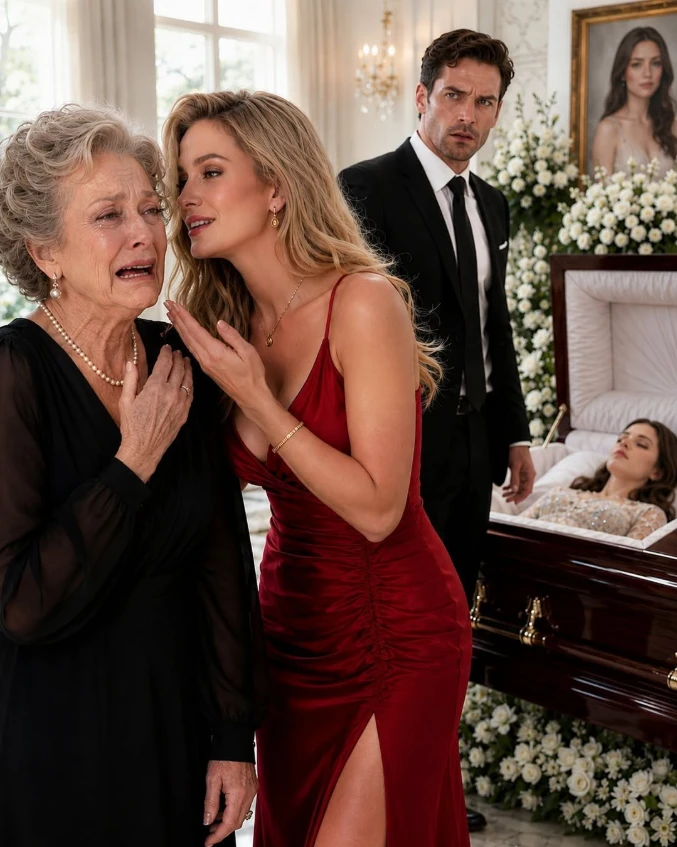
Then he began to read.
Then he began to read.
“My name is Katherine Monroe Hale. If this letter is being read after my death, then Bradley has already told everyone that I fell.”
Bradley’s face tightened.
Heather took one slow step backward.
Raymond continued.
“I did not fall.”
The room seemed to lose all sound.
Even the clock above the fireplace appeared too loud.
I felt Tanya shift against my shoulder, but she did not wake.
Bradley laughed once.
It was a dry, forced sound.
“This is absurd. She was emotionally unstable.”
Raymond did not look up.
“Katherine anticipated that response.”
He turned the page.
“My husband has spent the last fourteen months telling people that I am anxious, forgetful, and overwhelmed. He has repeated those words to my employees, my doctor, our neighbors, and even my mother. He is building a version of me that cannot be trusted.”
My knees weakened.
I remembered every conversation in which Bradley had described Katherine as exhausted.
Every time he had rolled his eyes and said motherhood was making her irrational.
Every time I had encouraged her to rest instead of asking why her husband was speaking for her.
Raymond’s voice remained steady.
“I am writing this while I am still capable of making decisions, managing my company, caring for my daughter, and understanding the danger inside my home.”
Bradley stepped toward him.
“You cannot present an unverified letter as evidence.”
Raymond finally looked up.
“This is not the only evidence.”
Heather’s hand moved toward the bracelet.
The silver chain trembled against her skin.
I noticed for the first time that the clasp had been bent.
Katherine had worn that bracelet almost every day since Tanya was born.
It carried three tiny charms.
A sunflower.
A letter T.
And a small silver heart engraved with the date Tanya first came home from the hospital.
Heather had no right to touch it.
No right to wear it.
No right to stand inside my daughter’s house pretending she had inherited her life.
Raymond returned to the letter.
“Bradley believes I have not noticed the missing money. He is wrong.”
Bradley stopped moving.
“I discovered that funds from my design company were transferred into an account connected to Bradley’s consulting business. The transfers were disguised as vendor payments.”
Heather’s eyes flickered toward Bradley.
He noticed.
“Don’t look at me like that,” he snapped.
Raymond continued before either of them could interrupt.
“Some of the payments were sent to a company called Desert Ridge Creative Solutions. That company has no employees, no physical office, and no legitimate contracts with my business.”
I knew the name.
Bradley had mentioned it at Christmas.
He said it was a new marketing agency helping Katherine expand.
Raymond opened his briefcase and removed a folder.
“For the record, Desert Ridge Creative Solutions was registered eighteen months ago to Heather Collins.”
Heather’s face emptied.
I stared at her.
Bradley spoke quickly.
“It was a legitimate subcontracting arrangement.”
Raymond placed the folder on the coffee table.
“There are invoices for services that were never performed.”
“That is your interpretation.”
“It is the conclusion reached by a forensic accountant retained by Katherine.”
Heather looked at Bradley.
“You said she never found the account.”
“Be quiet.”
Raymond paused.
That single command changed the air.
Heather’s expression hardened.
“Do not tell me to be quiet.”
Bradley turned toward her.
“This is not the time.”
“It became the time when my name appeared in her letter.”
Raymond continued reading.
“If Heather is present, she may still believe Bradley intends to marry her.”
Heather went completely still.
Bradley’s mouth opened.
Raymond read the next line slowly.
“He does not.”
Heather looked at him.
“What does that mean?”
Bradley moved toward her.
“Katherine was trying to divide us.”
Raymond kept reading.
“Bradley told Heather that my company, home, and life insurance would belong to him after my death. He told her that once I was gone, they could raise Tanya together.”
Heather’s breathing became shallow.
“But Bradley also signed a private agreement six months ago promising a portion of my company to another woman in exchange for her silence.”
Heather turned toward him.
“Another woman?”
Bradley’s eyes narrowed at Raymond.
“This is defamation.”
Raymond removed another sealed envelope.
“Katherine included a copy of the agreement.”
He placed it beside the folder.
Heather snatched it first.
Bradley tried to stop her, but Raymond stepped between them.
She tore open the envelope.
Her eyes moved rapidly across the page.
At the bottom was Bradley’s signature.
The other name was Monica Shaw.
I recognized it.
She was Katherine’s office manager.
The woman who had called me after the funeral and said she was too devastated to attend.
Heather looked up slowly.
“You told me Monica was helping Katherine hide money.”
Bradley’s voice lowered.
“She was.”
“You promised her fifteen percent of the company.”
“That document is meaningless.”
“You slept with her.”
Bradley did not answer.
Heather slapped the paper against his chest.
“You told me I was the only one.”
He grabbed her wrist.
The bracelet flashed beneath his fingers.
Raymond’s voice sharpened.
“Release her.”
Bradley let go.
Heather backed away, rubbing her skin.
The victorious expression she had worn at the funeral was gone.
For the first time, she looked less like a mistress who had won and more like another person Bradley had used.
I felt no sympathy for her.
Not yet.
But I saw fear.
Real fear.
Raymond resumed.
“If my mother is hearing this, I need her to know that I tried to tell her.”
My throat closed.
“I am sorry I was not clearer. I was afraid Bradley monitored my calls. I was right.”
Tears blurred the room.
I remembered Katherine whispering, “They’re watching everything.”
I had told her to sleep.
I had told her stress could make ordinary problems feel dangerous.
I had failed to hear the terror beneath her words.
Raymond’s voice softened.
“Mom, do not blame yourself. Bradley is skilled at making concern look like control and control look like care.”
I pressed my lips against Tanya’s hair.
Raymond continued.
“I began documenting everything after I found a second phone hidden in Bradley’s car.”
Bradley took another step toward the door.
A man who had been standing quietly near the hallway moved to block it.
I had assumed he was one of Raymond’s assistants.
Now he opened his jacket just enough to reveal a badge.
Bradley froze.
“Who are you?”
“Detective Samuel Ruiz, Scottsdale Police Department.”
Heather stared toward the kitchen.
Another detective appeared beside the back entrance.
Bradley turned to Raymond.
“You set me up.”
“No,” Raymond replied. “Katherine did.”
Detective Ruiz nodded toward the USB drive.
“Continue.”
Raymond lifted the evidence bag.
“Katherine delivered this device to my office two days before her death. She instructed me not to view it unless she died, disappeared, or became medically incapable of speaking for herself.”
Bradley’s face changed.
It was slight.
But I saw it.
For the first time since the funeral, he looked afraid.
Raymond inserted the USB drive into his laptop.
A series of folders appeared.
BANK RECORDS.
INSURANCE.
PHONE RECORDINGS.
HOME CAMERAS.
MEDICAL.
BRADLEY AND HEATHER.
Heather whispered, “Home cameras?”
Bradley stared at the screen.
Raymond opened the first video.
The image showed Katherine’s kitchen at night.
The timestamp was nine days before her death.
Katherine stood near the counter wearing a blue robe.
Bradley was in front of her.
His voice came through the speakers.
“You need to sign the transfer documents.”
“No.”
“It is temporary.”
“You moved nearly four hundred thousand dollars.”
Heather gasped.
Bradley looked toward her.
“I can explain.”
On the video, Katherine folded her arms.
“Your company has no revenue.”
“My company is building value.”
“By stealing from mine?”
Bradley slammed his hand against the counter.
The sound made Tanya stir.
I held her tighter.
On the screen, Katherine did not move.
“You will not raise your voice in front of Tanya,” she said.
Bradley leaned closer.
“If you file for divorce, I will take her.”
“You barely spend time with her.”
“I do not need to. I only need a judge to believe you are unstable.”
Katherine’s face went pale.
The recording ended.
No one spoke.
Raymond opened another file.
This one was audio only.
Heather’s voice filled the room.
“When will the policy pay?”
Bradley answered.
“Once the death certificate is issued.”
“How long?”
“A few weeks.”
“And the company?”
“Probate might slow things down, but I am her husband.”
Heather laughed softly.
“I still cannot believe she changed nothing.”
“She trusted me.”
The recording stopped.
Heather stared at the laptop.
“That conversation was taken out of context.”
Detective Ruiz looked at her.
“What context makes it better?”
Heather’s mouth closed.
Raymond selected another file.
Bradley’s voice again.
This time he sounded angry.
“You should have pushed harder.”
Heather replied, “I did. She almost caught me in the bedroom.”
“You left the bracelet.”
“I told you, the clasp got stuck.”
My eyes dropped to Heather’s wrist.
The bracelet.
The bent clasp.
Katherine had not given it to her.
Heather had taken it.
The recording continued.
“She noticed it was missing,” Bradley said.
“Then buy her another one.”
“It has her daughter’s birth date engraved on it.”
Heather sighed.
“Why does that matter?”
“It matters because she asked the housekeeper whether she had seen it.”
“Then get rid of the housekeeper.”
Bradley’s reply came after a pause.
“I already did.”
I remembered Katherine’s longtime housekeeper, Rosa, suddenly leaving two months earlier.
Bradley said she had stolen jewelry.
Katherine had seemed confused by the accusation.
Now I understood.
Rosa had seen too much.
Raymond stopped the recording.
Heather looked at the bracelet as though it had become hot against her skin.
She tried to remove it, but the damaged clasp would not open.
“Get this off me,” she whispered.
No one moved to help her.
Bradley began speaking rapidly.
“These recordings prove nothing about Katherine’s death. People argue in marriages. Financial disagreements happen.”
Detective Ruiz said, “Keep listening.”
Raymond opened a video labeled FINAL NIGHT.
The date was the night Katherine died.
My stomach twisted.
The image came from a small camera hidden inside a bookshelf facing the staircase.
The quality was dim but clear enough.
Katherine appeared at the bottom of the stairs holding a folder.
Bradley stood several feet away.
Heather was near the front door.
All three were present.
Heather had told police she was at work.
On the screen, Katherine held up the folder.
“I know about the insurance policies.”
Heather shook her head.
“Bradley, you said she did not know.”
He ignored her.
“Katherine, give me the documents.”
“No.”
“You are making this more serious than it is.”
“You opened a policy worth two million dollars using a forged signature.”
Bradley moved closer.
“It was financial planning.”
“You made yourself the beneficiary.”
“I am your husband.”
“You also created a trust that gives Heather access to Tanya’s inheritance.”
Heather looked shocked.
On the video, she turned toward Bradley.
“You told me that account was for the house.”
He snapped, “Stay out of this.”
Katherine backed toward the stairs.
“I sent copies to my attorney.”
Bradley stopped.
The look on his face made my skin crawl.
“You did what?”
“I also changed my will.”
Heather whispered, “Bradley.”
Katherine continued.
“You receive nothing.”
His expression emptied.
“My company goes into a trust for Tanya. My mother becomes her guardian if I die under suspicious circumstances. The house remains protected. You cannot sell it.”
Bradley took another step.
“You cannot take my daughter.”
“You are not taking her anywhere.”
“Katherine, give me the folder.”
“No.”
Heather moved forward.
“Just give it to him.”
Katherine looked at her.
“You are wearing my bracelet.”
Heather’s hand flew to her wrist.
Bradley lunged toward the folder.
Katherine pulled away.
They struggled.
Then Bradley shoved her.
It happened in one violent second.
Katherine lost her balance at the edge of the staircase.
Her hand reached for the railing.
Heather could have grabbed her.
She was close enough.
Instead, she stepped backward.
Katherine fell.
Her body struck the stairs once.
Then again.
Then disappeared below the camera’s view.
The sound that followed tore through me.
The laptop continued playing.
For several seconds, Bradley and Heather stood frozen.
Neither ran to her.
Neither called for help.
Heather finally whispered, “Is she breathing?”
Bradley walked down the stairs.
The camera captured only his legs.
A long silence followed.
Then his voice drifted upward.
“She’s alive.”
Heather rushed down.
“Call an ambulance.”
“No.”
“What?”
“Give me a minute.”
“What are you doing?”
Bradley’s voice became quieter.
“If she wakes up, she tells everyone.”
My entire body went cold.
Heather began crying.
“I did not agree to this.”
“You wanted her gone.”
“I wanted you to leave her.”
“You wore her bracelet to her house.”
“That does not mean I wanted this.”
The video showed Bradley coming back up the stairs.
He carried Katherine’s phone and the folder.
“Delete your messages.”
“Bradley—”
“Delete them.”
“What about her?”
“I said give me a minute.”
The recording continued for six more minutes before the emergency call was made.
Six minutes.
My daughter lay injured at the bottom of the stairs while they discussed money, messages, and stories.
Six minutes in which help might have saved her.
Six minutes they had stolen.
Raymond closed the laptop.
Heather was sobbing now.
Bradley did not move.
His face had become expressionless.
Detective Ruiz stepped forward.
“Bradley Hale, turn around and place your hands behind your back.”
Bradley looked at Heather.
“This is because of you.”
Her head jerked up.
“Because of me?”
“You distracted me.”
“You pushed her.”
“You brought up the bracelet.”
“You told me she was already dead.”
“I never said that.”
“It is on the recording.”
Detective Ruiz seized Bradley’s arm.
He resisted.
The second detective moved in.
For the first time, Tanya woke.
She lifted her head from my shoulder.
“Grandma?”
I turned her face toward me so she would not see the handcuffs.
“It’s all right, sweetheart.”
Bradley heard her voice.
“Tanya.”
He tried to move toward us.
I stepped backward.
“Do not come near her.”
“I am her father.”
“You left her mother at the bottom of the stairs.”
“It was an accident.”
“You waited six minutes.”
“Katherine made me panic.”
I stared at him.
Even then, he blamed her.
Even in handcuffs, with the truth playing from the laptop, he blamed the woman he had killed.
Detective Ruiz led him toward the door.
Bradley turned his head.
“Florence, do not let Raymond manipulate you. Katherine was confused.”
I looked at the coffin flowers still filling my memory.
White roses chosen for photographs.
The perfect shirt.
The dry eyes.
The way he had already begun speaking about custody.
“You should have remembered that confused women can still install cameras.”
The detective took him outside.
Heather remained in the living room.
The bracelet still circled her wrist.
Detective Ruiz looked at her.
“Heather Collins, you are under arrest for conspiracy, evidence tampering, financial fraud, and making false statements during a death investigation.”
She shook her head violently.
“I did not push Katherine.”
“You delayed reporting the injury and helped conceal evidence.”
“I wanted to call.”
“But you did not.”
“Bradley stopped me.”
“You remained for six minutes.”
“I was afraid.”
I finally spoke.
“Katherine was afraid too.”
Heather looked at me.
Her face collapsed.
“I did not know he would do that.”
“You knew he was stealing from her.”
She cried harder.
“You knew he wanted her life insurance.”
“He said she would be financially secure after the divorce.”
“You lied about where you were.”
“I panicked.”
“You wore her bracelet to her funeral.”
Her eyes dropped to her wrist.
“I thought Bradley gave it to me.”
“You heard Katherine say it was hers before she died.”
Heather had no answer.
I stepped closer.
“You whispered that you won.”
Tears streaked her makeup.
“I was angry.”
“No. You were celebrating.”
The detective guided her hands behind her back.
As she was led away, she looked at me over her shoulder.
“I am sorry.”
I held Tanya close.
“Tell that to the prosecutor.”
When the front door closed, the house became silent.
Raymond removed the USB drive from the laptop.
Detective Ruiz remained near the window, speaking quietly into his phone.
I sat down because my legs could no longer hold me.
Tanya rested her head against my chest.
“Where did Daddy go?”
The question cut deeper than anything else.
I looked at Raymond.
He lowered his eyes.
There was no perfect answer for a four-year-old.
Only truth softened enough for a child to carry.
“Your daddy has to talk to the police,” I said.
“Is Mommy coming back?”
My breath caught.
“No, sweetheart.”
“Because she fell?”
I closed my eyes.
“Yes.”
She was silent for a moment.
Then she touched the bracelet charm on my own wrist.
Katherine had given me a matching sunflower years earlier.
“Mommy likes yellow flowers.”
“She does.”
“Why were the funeral flowers white?”
I pressed my face into her hair.
“I don’t know.”
But I did.
Bradley had replaced Katherine’s sunflowers with roses because he had spent years replacing everything she loved with what suited him.
Her clothes.
Her friendships.
Her employees.
Her version of reality.
Even her funeral.
Raymond sat across from me.
“There is more.”
I looked at him.
“How can there be more?”
“The will.”
I had forgotten.
He opened another document.
“Katherine updated it eleven days before her death.”
He read the major provisions.
Her design company would be placed into a protected trust for Tanya.
I would serve as temporary guardian, subject to court approval.
Raymond and an independent financial manager would oversee the trust.
The Scottsdale house would remain available for Tanya’s care but could not be sold by Bradley.
Every employee at Katherine’s company would retain their job during the transition.
A separate fund had been created for Rosa, the housekeeper Bradley falsely accused.
Katherine had also set aside money for legal expenses, counseling, and security.
She had planned carefully.
More carefully than any frightened woman should ever have needed to.
Then Raymond reached the final provision.
“In the event that my death is determined to have resulted from criminal conduct by my husband, Bradley Hale shall be treated as having predeceased me for all inheritance purposes.”
Bradley would receive nothing.
Not the company.
Not the house.
Not the insurance proceeds.
Not Tanya’s trust.
The transaction he had been waiting to complete had vanished.
Raymond placed another envelope in my hands.
“This one is for you alone.”
I looked at the handwriting.
Mom.
My fingers shook.
“I cannot read this now.”
“You do not have to.”
Detective Ruiz ended his call.
“The district attorney is reopening the death investigation immediately. Based on the video, arrests, and financial evidence, we expect charges to be filed today.”
“What charges?”
He hesitated.
“Murder or manslaughter for Bradley, depending on the prosecutor’s review. Conspiracy and accessory charges for Heather. The delayed emergency call and financial motive will be significant.”
I looked toward the staircase.
The last place Katherine had stood alive.
“Can Tanya stay with me?”
“The child-welfare emergency order names you as the temporary caregiver. Raymond has the documents.”
Bradley had thought fatherhood would hand him control.
Katherine had anticipated him.
Even in fear, she had protected her daughter.
That evening, after the police left, I carried Tanya upstairs.
She stopped outside Katherine’s bedroom.
“Can I sleep in Mommy’s bed?”
I swallowed.
“Yes.”
The room still smelled faintly of her perfume.
A yellow dress hung behind the closet door.
Sketches were spread across the desk.
A half-finished children’s bedroom design covered the largest board.
Sunflowers painted along one wall.
A small reading corner.
A window seat filled with pillows.
At the bottom, Katherine had written:
Tanya’s room — surprise for her fifth birthday.
I turned away before Tanya saw me cry.
She climbed beneath the blanket and asked me to lie beside her.
Within minutes, she fell asleep.
I remained awake, holding Katherine’s sealed letter.
At midnight, I opened it.
Mom,
If you are reading this, I am sorry.
I know you will blame yourself because that is what mothers do when something happens to their children.
Please do not.
Bradley worked very hard to separate me from the people who loved me. He made every concern sound like a misunderstanding. Every time I tried to explain, he had already prepared a version of me that sounded unstable.
You did not fail me.
I waited too long because I wanted to believe Tanya could keep both parents.
I wanted to believe I could fix the marriage quietly.
I wanted to avoid scandal, court, gossip, and fear.
By the time I understood that he did not want reconciliation, he had access to my accounts, my home, and my medical information.
I am leaving evidence because I do not know whether I will have time to leave safely.
The tears came so hard I had to stop reading.
Tanya shifted beside me.
I wiped my face and continued.
Please raise Tanya to know that love never requires her to become smaller.
Teach her that a person who controls her friends, money, voice, or movement does not love her more deeply.
Teach her that fear is information.
Do not let Bradley turn my daughter into another asset he believes he owns.
And please do one thing for me.
Put sunflowers at my grave.
I pressed the letter to my chest.
“I will,” I whispered.
The investigation moved quickly after that.
Bradley was charged with second-degree murder, evidence tampering, financial exploitation, conspiracy, and fraud.
Prosecutors argued that although the shove had occurred during a struggle, his delay in calling for help and his statement that Katherine could not be allowed to wake demonstrated consciousness of guilt.
Heather accepted a plea agreement.
She admitted to helping Bradley move money, falsify invoices, delete messages, and lie about the night Katherine died.
She also admitted she had removed the bracelet from Katherine’s bedroom days earlier.
Her testimony confirmed that Bradley had discussed Katherine’s life insurance and inheritance repeatedly.
Monica Shaw, the office manager, cooperated as well.
She revealed that Bradley had used threats and promised company shares in exchange for her help accessing financial records.
The empire of lies collapsed faster than I expected.
Katherine’s employees came forward.
So did neighbors.
So did Rosa.
Rosa had seen Bradley grip Katherine’s arm during an argument and had photographed the bruise.
Bradley fired her the next morning and accused her of stealing.
She had kept the photograph.
Katherine’s doctor admitted Bradley had called twice attempting to describe her as paranoid.
Her accountant revealed that Katherine had asked for a full audit.
Her security company recovered deleted footage from the night of her death.
Every person held one piece.
Katherine had collected enough of them to expose the entire picture.
At trial, Bradley wore a dark suit and the expression of an injured man.
His attorney described Katherine’s death as a tragic accident.
He claimed the financial transfers were ordinary marital decisions.
He said the six-minute delay resulted from shock.
Then the prosecutor played the video.
The jury watched Bradley stand over the staircase.
They heard Heather ask whether Katherine was alive.
They heard him answer yes.
They heard him say, “If she wakes up, she tells everyone.”
No explanation could erase those words.
When I testified, Bradley stared at me.
He wanted me to look uncertain.
I did not.
The prosecutor asked about Katherine’s final call.
I repeated every word I remembered.
“If anything happens to me, don’t believe Bradley.”
His attorney asked why I had not contacted police immediately.
The question sliced through me.
“Because I did not understand how much danger she was in.”
“So you believed she was exaggerating?”
“I believed she was frightened.”
“But you did nothing.”
The courtroom became still.
I could have become defensive.
Instead, I told the truth.
“I did not do enough.”
Bradley smiled faintly.
Then I looked at the jury.
“That is why abusers isolate people. They do not only frighten their victims. They teach everyone around the victim to reinterpret fear as stress, confusion, or marital conflict.”
The smile disappeared from Bradley’s face.
“I will regret that phone call for the rest of my life. But my regret does not make Katherine unreliable. It shows how effective Bradley’s deception was.”
The prosecutor later displayed the financial records.
More than eight hundred thousand dollars had been diverted from Katherine’s company.
Bradley had borrowed against assets he did not own.
He had promised portions of the company to two women.
He had opened life insurance policies using forged documents.
He had planned to petition for control of Tanya’s inheritance after Katherine’s death.
The jury deliberated for seven hours.
Bradley was found guilty on every major count.
At sentencing, I was allowed to speak.
Tanya remained outside with a family advocate.
I stood facing the judge.
Bradley sat behind the defense table.
“My daughter loved beauty,” I began. “She built rooms where people felt safe. She remembered birthdays. She paid employees when clients were late. She planted sunflowers even when the Arizona heat burned them.”
My voice shook, but I continued.
“Bradley reduced her life to a house, a company, an insurance payout, and a child he wanted to control.”
He stared at the table.
“He thought killing Katherine would turn her silence into his freedom.”
I looked directly at him.
“But she spoke.”
He finally lifted his eyes.
“She spoke through the will. She spoke through the recordings. She spoke through every document she preserved and every person she tried to protect.”
I placed my hand over Katherine’s letter in my pocket.
“You did not inherit her life.”
The judge sentenced Bradley to decades in prison.
Heather received a shorter sentence because of her cooperation, but she was ordered to repay the stolen funds and permanently barred from contacting Tanya.
After the trial, I returned to the funeral home.
The director had stored the jewelry removed before Katherine’s burial.
The bracelet had been recovered during Heather’s arrest and entered into evidence.
Months later, the prosecutor returned it to me.
The clasp was repaired.
I did not wear it.
I placed it inside a small wooden box beside Katherine’s letter.
It belonged to Tanya.
She would receive it when she was old enough to understand what it represented.
Not the woman who stole it.
Not the funeral insult.
The day Katherine became a mother.
A year after her death, Tanya and I visited the cemetery.
I carried an armful of sunflowers.
No white roses.
No photographers.
No people discussing appearances.
Just yellow petals moving in the desert wind.
Tanya placed one flower beneath Katherine’s name.
“Mommy would like these.”
“Yes.”
“Can she see them?”
“I think so.”
Tanya looked at the headstone.
“Did Daddy hurt Mommy?”
The question had come sooner than I wanted.
I knelt beside her.
“Yes.”
She thought for a moment.
“Did Mommy do something bad?”
“No.”
“Then why?”
“Because sometimes people hurt others when they care more about control than love.”
She touched the engraved letters of Katherine’s name.
“I miss her.”
“So do I.”
Tanya leaned against me.
We sat there until the sun began to lower.
Katherine’s company survived.
Her senior designers took over daily operations.
The business created a new program in her name, providing free room designs for families moving into shelters after domestic abuse.
Rosa returned as the household manager.
She refused to accept the money Katherine had left her until Raymond convinced her it was not charity.
“It was gratitude,” he said.
The Scottsdale house became Tanya’s home again.
We removed Bradley’s office.
In its place, we built the sunflower room from Katherine’s drawings.
Yellow walls.
A reading corner.
A wide window seat.
On Tanya’s fifth birthday, she walked in and gasped.
“Mommy designed this?”
“She did.”
Tanya touched the painted flowers.
“She knew I would like it.”
“She knew you better than anyone.”
That night, after the party, I found Tanya asleep beneath the window with Katherine’s sketchbook open beside her.
I carried her to bed.
Before turning off the light, I looked at the wall of sunflowers.
For months, I had believed the final chapter of Katherine’s life was the staircase.
The fall.
The six-minute delay.
The coffin surrounded by flowers she did not love.
But that was only the chapter Bradley had tried to write.
Katherine had written another.
She had protected her daughter.
She had exposed the theft.
She had prevented Bradley from inheriting a single dollar.
She had preserved the evidence that convicted him.
And she had left behind instructions for a life Tanya could build without fear.
Years later, when Tanya turned eighteen, I gave her the wooden box.
She opened Katherine’s letter first.
Then she lifted the bracelet.
The sunflower charm caught the light.
“This is the one Heather wore?”
“Yes.”
Tanya studied it.
“Why did she tell you she won?”
“Because she thought your mother’s death had given her everything she wanted.”
Tanya fastened the bracelet around her wrist.
It fit.
“What did she actually win?”
“Nothing.”
Tanya looked toward the photograph on the mantel.
Katherine laughing in a field of sunflowers, one hand resting on her pregnant belly.
“She helped expose him.”
“Yes.”
“And Mom made sure he could not take the company or the house.”
“Yes.”
“Then Mom won.”
The words settled over me.
For years, I had avoided thinking in terms of winners.
Nothing could make Katherine’s death a victory.
Nothing could return the birthdays, graduations, arguments, and ordinary mornings stolen from us.
But Tanya was right about one thing.
Bradley believed the story would end when Katherine stopped breathing.
He believed silence meant defeat.
He believed the house, business, money, and child would fall into his hands.
Instead, the will locked him out.
The letter revealed his motive.
The recordings destroyed his lies.
The video placed him at the staircase.
And the daughter he had treated like an inheritance grew into a woman who knew exactly who her mother had been.
Tanya touched the sunflower charm.
“Grandma?”
“Yes?”
“Thank you for believing her.”
My eyes filled.
“I wish I had believed her sooner.”
Tanya took my hand.
“You listened when it mattered.”
I looked again at Katherine’s photograph.
At the woman Bradley had tried to erase.
At the mother who had prepared for the possibility that she might not survive long enough to tell the truth herself.
“No,” I said quietly. “Your mother made sure the truth could speak without us.”
Outside, sunflowers moved beneath the evening wind.
And on Tanya’s wrist, the bracelet Heather had worn as a trophy became what Katherine had always intended it to be.
A promise passed from mother to daughter.
Proof that love could survive theft, betrayal, and even death.
Heather had whispered, “I won.”
But she had misunderstood the game.
Katherine had never been fighting for Bradley.
She had been fighting for Tanya.
And in the end, Bradley lost the future he tried to steal.