Can You Test Positive For A Food Allergy But Not Be Allergic?
Hi, I’m Dr. Dave Stukus. I’m a Professor of Clinical Pediatrics, a Board-Certified Allergist and Immunologist, and I’m also a member of the Medical and Scientific Council for the Asthma and Allergy Foundation of America.
Can you test positive for a food allergy but not be allergic?
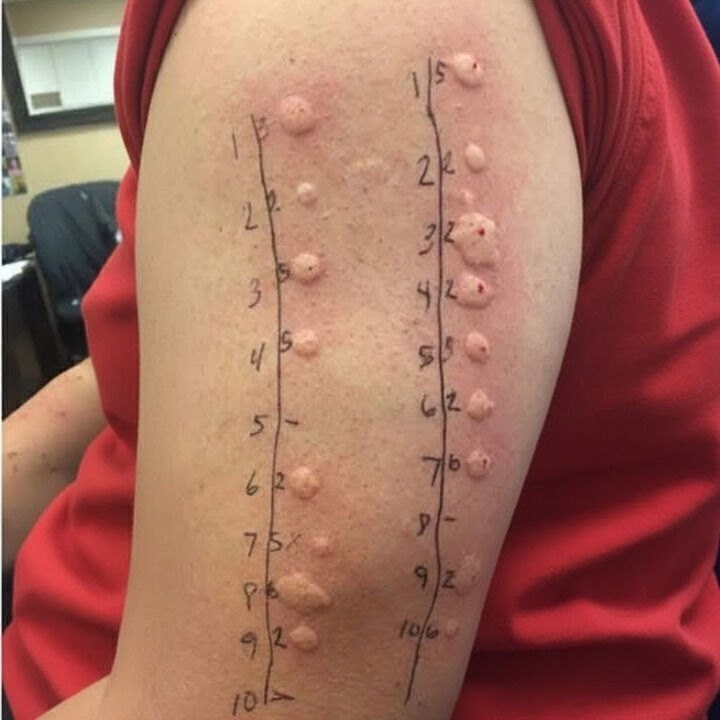
Absolutely. This is why food allergy tests were never intended to be screening tests. The food allergy tests that we use detect an immunoglobulin, otherwise known as an antibody called IgE, and IgE is involved in the allergic response towards foods. The problem is a lot of people can find IgE towards foods if you do skin testing or blood testing, but they’re not actually allergic. There are many reasons for that. Sometimes the IgE is binding to a food on the assay that we use because that food looks like something that person is allergic to in the environment.
For instance, we know that people with birch tree pollen allergy, which can cause itchy watery eyes, sneezing, runny nose in the spring months, can cause false positive testing to peanut. So, we really want to use these tests when a clinical history supports a diagnosis of food allergy and we rely on you.
So, people come to us, and they say, every time I eat this food, no matter what form, within a few minutes or up to one or 2 hours later, I develop these symptoms such as big red itchy hives or swelling or itching or rashes or vomiting or anaphylaxis.
If you’re eating a food and not having those symptoms, you’re not allergic to that food. That’s the best test. If you are experiencing those symptoms, then talk to your doctor, talk to an allergist about what testing may be indicated for you. But just because you have a positive test, does not mean that you’re actually allergic. And it always has to be interpreted within the context of the clinical history.
David Stukus, MD, is a Professor of Clinical Pediatrics in the Division of Allergy and Immunology, Director of the Food Allergy Treatment Center, and Associate Director of the Pediatric Allergy and Immunology Fellowship Program at Nationwide Children’s Hospital and The Ohio State University College of Medicine. He is board certified in allergy/immunology and pediatrics.
Dr. Stukus has devoted his career to communicating evidence-based medicine and best clinical practice to colleagues, medical professionals of all backgrounds, patients, and the general public. In addition to providing clinical care for children with all types of allergic conditions, he participates in clinical research, quality improvement, patient advocacy, and medical education.
Many people underestimate how small daily habits can have surprising effects on their well-being. One of the most overlooked routines is the position or environment we sleep in — and experts are now warning that it can have more influence than we realize.
According to recent discussions online, certain sleeping behaviors may lead to long-term discomfort, low energy, or even emotional imbalance. Specialists explain that factors such as lighting, phone use before bed, and posture can all affect how the body recovers overnight.
Several people have shared their own experiences, claiming that making small changes to how or where they sleep improved their mood, focus, and even skin health. The message is simple: the quality of rest depends not only on hours slept but also on how you sleep.
So, before you close your eyes tonight, take a moment to think about what’s around you — and who or what you share your bed with. Sometimes, small details make all the difference.