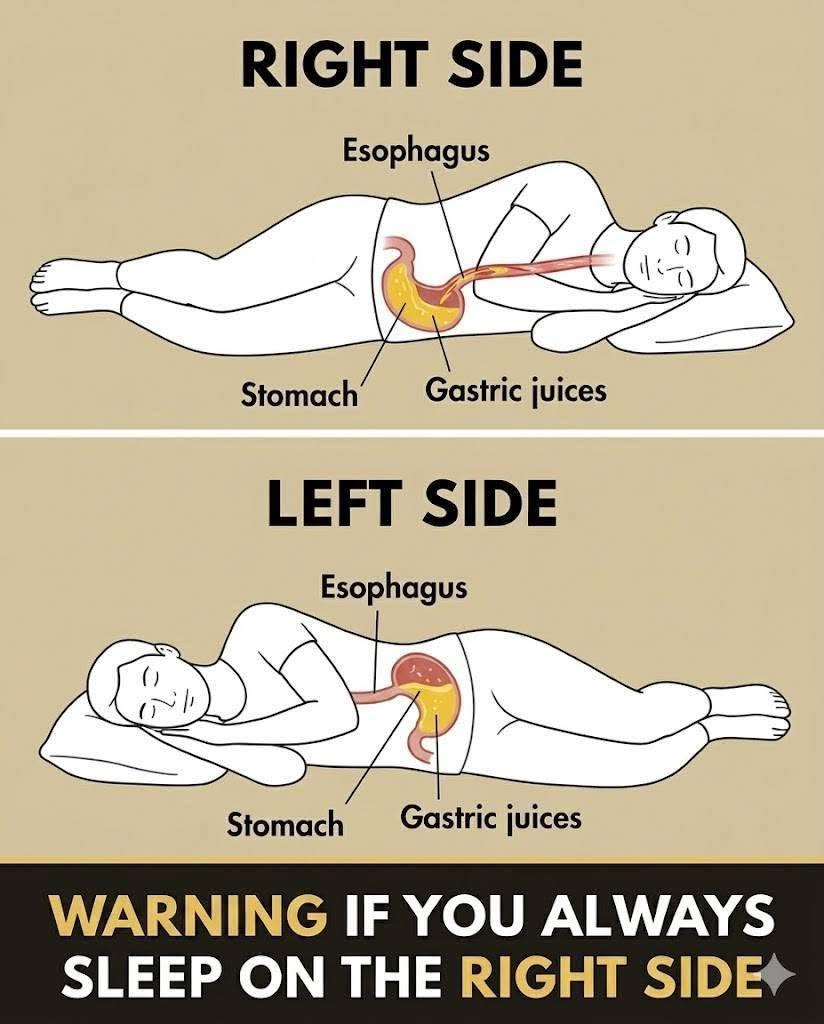
Let me walk you through the research, because I know how easy it is to find conflicting information online. Here’s what we actually know.
Gastroesophageal reflux disease (GERD): Multiple studies have shown that sleeping on the right side significantly increases acid exposure in the esophagus compared to left-side sleeping. One study found that right-side sleepers had nearly double the acid reflux events. If you’ve ever woken up with a sour taste in your mouth or a burning throat, your sleep position might be the culprit.
Heart function: For people with congestive heart failure, sleeping on the left side can cause measurable changes in heart rhythm and blood pressure. But for healthy people? The effect is minimal. Your heart can handle the extra work. Still, some cardiologists recommend avoiding prolonged right-side sleeping if you have any known heart issues.
Pregnancy: This is the big one. Pregnant women are universally advised to sleep on their left side, especially in the third trimester. Why? The growing uterus can compress the inferior vena cava—a major vein that returns blood from your lower body to your heart. Sleeping on the left side relieves that pressure and improves blood flow to the fetus. Sleeping on the right side? Not dangerous for short periods, but not ideal for all night.
Digestion: Your digestive system moves waste from right to left across your body. Sleeping on your right side can slow this natural movement, potentially contributing to constipation or bloating in sensitive individuals.
But I Can’t Sleep on My Left Side—It Feels Wrong
I hear you. After years of right-side sleeping, switching sides feels impossible. Your body has muscle memory. Your brain associates “left side” with “not sleepy.” You toss and turn and end up back on your right side by 2 AM.
Here’s what worked for me.
Start with a pillow barricade. Put a long body pillow behind your back. It physically prevents you from rolling onto your right side. You’ll wake up on your left side without even trying.
Tilt your whole bed. Raise the head of your bed by 4–6 inches (put blocks or risers under the legs). This uses gravity to keep stomach acid down regardless of which side you sleep on. It’s a game-changer for reflux.
Try a wedge pillow. If raising the whole bed isn’t possible, a wedge pillow under your upper body does the same thing. It’s not as comfortable at first, but your body adapts within a week.
Go slow. Commit to left-side sleeping for just the first hour of the night. Then let yourself roll over. After a few nights, extend it to two hours. Then three. Within two weeks, your body will start to prefer it.
Address the root cause. If you have acid reflux that’s bad enough to be affected by sleep position, you might need to look at your diet, eating schedule, or medication. Sleep position is a bandage. The underlying issue deserves real attention.
Who Should Actually Worry About Right-Side Sleeping
Let me be clear. For most healthy people, sleeping on your right side is not dangerous. Your body is resilient. It adapts. You don’t need to panic and change a lifetime of habits based on one article.
But if you fall into any of these categories, you should pay attention.
People with GERD or chronic heartburn: You already know you have acid issues. Left-side sleeping is one of the most effective non-medical interventions you can try. Do it for two weeks. Track your symptoms. You’ll likely notice a difference.
People with known heart conditions: Talk to your cardiologist. Some will tell you left-side sleeping is better. Some will say it doesn’t matter. Don’t guess—ask.
Pregnant women (second and third trimester): Left-side sleeping is the official recommendation. It’s safer for you and your baby. Use pillows to make it comfortable.
People who wake up with a sour taste, cough, or hoarse throat: Those are classic silent reflux symptoms. Your sleep position could be the missing piece of the puzzle.
People with sleep apnea: Some studies suggest side sleeping (either side) reduces apnea events compared to back sleeping. But right versus left? Less clear. Focus on getting off your back first.
Signs Your Sleep Position Is Hurting You (Not Just Annoying You)
How do you know if your right-side habit is actually affecting your health? Look for these clues.
-
You wake up with a burning sensation in your chest or throat
-
You have a chronic dry cough that’s worse in the morning
-
Your breath smells sour when you first wake up
-
You feel bloated or uncomfortably full in the morning despite not eating overnight
-
You’ve been diagnosed with GERD but medication alone isn’t fixing it
-
You have heart palpitations that seem worse when you first lie down
If any of these sound familiar, try left-side sleeping for one week. It costs nothing. It takes minimal effort. And if it helps? You’ve just found a free, side-effect-free treatment for something that’s been bothering you.
When Right-Side Sleeping Might Actually Be Better
I don’t want to be one-sided (pun intended). There are situations where right-side sleeping is preferable.
After a large meal: If you’ve eaten a big dinner late at night, sleeping on your right side can actually help your stomach empty faster. The downside is increased acid reflux. Pick your poison.
Certain postsurgical patients: Some abdominal or back surgeries come with specific positioning instructions. Always follow your doctor’s orders, not general advice.
People with left shoulder pain: If your left shoulder is injured or arthritic, sleeping on it all night is a bad idea. Protect the injury first. Worry about long-term sleep position later.
People who just can’t switch: If you’ve genuinely tried left-side sleeping and it ruins your sleep quality, the benefits of good sleep outweigh the risks of right-side sleeping. Sleep deprivation is more dangerous than mild acid reflux. Do what works for you.
A Note on Back Sleeping (The Third Option)
I’ve focused on side sleeping because that’s what most people do. But back sleeping deserves a mention.
Back sleeping is generally excellent for spinal alignment. It prevents wrinkles (no face smashing into pillows). And it doesn’t cause the acid reflux issues of right-side sleeping.
The downsides? Back sleeping can worsen sleep apnea and snoring. And some people find it uncomfortable or impossible to maintain.
If you can sleep on your back, that’s great. If not, left side is better than right side for most people with digestive or heart concerns. But don’t lose sleep (literally) over it.
Frequently Asked Questions
Is sleeping on your right side really that bad?
No. For most healthy people, it’s fine. The warning is for people with specific conditions—GERD, heart disease, pregnancy—where side sleeping matters. If you feel fine sleeping on your right side, you probably are fine.
Can I train myself to sleep on my left side?
Yes. Use pillows as barriers. Try a wedge pillow. Be patient. Most people can retrain their sleep position within 2–4 weeks.
What if I wake up on my right side no matter what?
That’s normal. We all move during sleep. The goal isn’t perfection—it’s spending more of the night on your left side than your right. Even 60/40 makes a difference.
Does this apply to children?
No. This advice is for adults. Infants should always sleep on their backs to reduce SIDS risk. Older children without health conditions can sleep however they’re comfortable.
Can a wearable device help me track my sleep position?
Yes. Many smartwatches and fitness trackers now detect sleep position. They’re not perfectly accurate, but they can show you patterns. I used mine to confirm I was spending 80% of the night on my right side before I switched.
What about sleeping on your stomach?
Stomach sleeping is generally the worst position for spinal health. It strains your neck and lower back. If you’re a stomach sleeper, work on transitioning to side sleeping before worrying about left versus right.
A Gentle Final Thought
I still miss my right side sometimes. It was familiar. It was easy. It was the position I’d curled into for thousands of nights before I knew any better.
But I don’t miss waking up with that burning sensation. I don’t miss the sour taste. I don’t miss wondering why my chest felt weird when everyone said I was perfectly healthy.
Changing sleep positions felt impossible for the first three nights. By night seven, it felt normal. By night fourteen, my right side felt strange.
Our bodies are adaptable. They want to heal. They want to function well. Sometimes they just need a little help—a pillow, a tilt, a conscious choice before we drift off.
So tonight, when you get into bed, notice which way you turn. If it’s your right side, ask yourself: is that habit or preference? Comfort or just familiarity?
And maybe—just maybe—try the other side for a change.
Your stomach, your heart, and your morning self might thank you.
Are you a right-side, left-side, or back sleeper? Have you ever noticed that your sleep position affects how you feel in the morning? Share your experience in the comments—I’d love to know if I’m the only one who had no idea this mattered for so long. 💤