A week before Rebecca’s forty-fifth birthday, I stood on her porch holding a cake I could barely afford and pretending my hands were not shaking.
The chocolate smelled rich and dark through the bakery box, almost like coffee, and the strawberries around the edge looked so carefully placed that for one foolish second I thought she might remember being little.
She used to ask for that exact cake every year.
She used to clap when I brought it home.
That afternoon, the air was cold enough to make my fingers ache, and a small American flag near her mailbox snapped in the wind while I shifted the box against my coat and knocked.
I had candles in my purse.
I had a lighter too, because after forty years of nursing and forty-five years of motherhood, I had learned not to count on anyone else remembering the small things.
The door opened.
Rebecca looked at me the way people look at a stranger who has interrupted dinner.
“Oh,” she said. “It’s you.”
I smiled anyway.
Mothers become skilled at smiling anyway.
“Happy early birthday, sweetheart,” I said, lifting the cake. “Chocolate with strawberries. Your favorite.”
She did not reach for it.
She stepped aside and let me in like she was allowing a repairman to check the pipes.
Her house was beautiful in the way expensive houses are beautiful when someone else helped pay for them.
Hardwood floors.
White trim.
Big clean windows.
A kitchen island that looked like it belonged in a magazine.
The candles she liked burned somewhere in the room, filling the house with that polished clean-linen smell that never smelled like linen at all.
It smelled like money.
I knew that house down to its foundation because $150,000 of my life was inside it.
That was the down payment I had wired three years earlier from the savings I built one night shift at a time.
I had been a nurse for forty years.
My hands had held pressure on wounds, turned frightened patients in bed, steadied newborn heads, and signed more checks for Rebecca than I could count.
I helped with college.
I helped with the wedding.
I helped with the twins.
When David lost his job, I helped with the mortgage for eight months because that was what mothers did in my mind.
We helped.
We stretched.
We went without.
We told ourselves love was supposed to look like sacrifice, even when sacrifice started looking a lot like being used.
Rebecca sat in the armchair across from me and crossed one leg over the other.
Her nails were perfect.
Her hair was perfect.
Her face was not.
It was tight with irritation.
“Mom,” she said, “we need to talk.”
I leaned forward at once, foolishly grateful.
Talk meant a door was opening.
Talk meant maybe she had been stressed, maybe I had misunderstood the coldness, maybe there was still a way back to the daughter who once tucked her little hand into mine in every parking lot.
“Of course,” I said. “Anything. What do you want for your birthday this year? A trip? Jewelry? That car you mentioned?”
Rebecca stared at me for a moment.
Then she said the sentence that ended my life as her mother in every way that mattered.
“The greatest gift would be if you just died.”
I heard the refrigerator hum.
I heard a car pass outside.
I heard my own breath catch like it had hit a wall.
“What did you say?” I whispered.
“You heard me.”
Her voice did not shake.
That was the worst part.
“I’m tired of you,” she said. “Tired of your calls. Tired of your visits. Tired of you always showing up. My life would be easier and happier if you disappeared.”
The cake box trembled in my lap.
The candles shifted.
A smear of chocolate pressed against the inside of the lid where my fingers had clenched too hard.
“Rebecca,” I said, “I’m your mother.”
“And that’s exactly the problem.”
She stood and began pacing, getting louder now, as if volume could turn cruelty into honesty.
“You make being your daughter feel like a job. You always need attention. You always want to be included. I need freedom.”
Freedom.
I had given her my weekends so she could rest.
I had given her my savings so she could own that house.
I had given her my body when she was born, my sleep when she was sick, my patience when she was angry, and my pride whenever she called only because she needed something.
And she called that prison.
I stood up slowly.
My knees felt loose, but I did not fall.
“I can’t believe you’re saying this,” I murmured.
Rebecca laughed once.
It was small and sharp.
“Everything you did was for you, Mom. So you could feel needed. So you could control things. I’m not a little girl anymore.”
For one second, I saw her at three years old in a hospital bed with pneumonia, her tiny fingers wrapped around mine.
I saw her at sixteen in a pink prom dress, spinning in the hallway while I took too many pictures.
I saw her in college, crying over the phone because she had changed her major again and thought she had ruined her life.
Every time, I had said the same thing.
Don’t worry, honey.
We’ll figure it out.
And I had.
That day, standing in the doorway of the house I helped buy, I finally understood that she had not mistaken my love for weakness.
She had counted on it.
I whispered, “Happy birthday.”
Then I walked out.
I sat in my car for a long time before starting it.
The cake sat beside me, ridiculous and ruined, with the candles crooked in the frosting.
My breath fogged the windshield.
A yellow school bus rolled past the corner, children laughing inside, and the sound made my chest ache in a place I thought age had already toughened.
My daughter had wished me dead.
So I went home and began to die.
Not physically.
Not violently.
Not loudly.
I died as her safety net.
At 8:17 p.m., I lifted the trash lid in my small apartment and dropped the cake inside.
It landed with a dull thud.
No screaming.
No smashed frosting.
No dramatic scene.
Just the sound of one version of me ending.
My apartment was quiet after that.
One bedroom.
Small kitchen.
Old sofa.
A lamp with a shade I had meant to replace for six years.
I had downsized after my husband died because I told myself it was practical.
The truth was uglier.
I made my world smaller so Rebecca’s could stay big.
That night, I pulled boxes from the closet.
Receipts.
Statements.
Records.
I had kept everything, not because I planned revenge, but because I had once been proud of how much I could give.
At 9:03 p.m., I opened the folder marked COLLEGE.
Forty-two thousand dollars.
At 9:38 p.m., I opened the wedding folder.
Thirty-five thousand.
At 10:11 p.m., I found the wire transfer for the house.
One hundred and fifty thousand.
At 10:42 p.m., I found the mortgage confirmations from the year David lost his job.
Eight payments.
Sixteen thousand.
At 11:09 p.m., I found the orthodontist receipt for the twins’ braces.
Four thousand.
Then came the emergency account.
Twenty thousand dollars, opened under both our names because Rebecca said it made her feel safer.
Every deposit had come from me.
I spread the papers across my coffee table until it looked less like a living room and more like an evidence table.
There was the credit union transfer slip.
There were the bank statements.
There were the invoices.
There were the mortgage confirmations.
There were handwritten thank-you notes from years ago, back when Rebecca still knew how to sound grateful.
At midnight, the calculator on my phone showed the number I had never allowed myself to see.
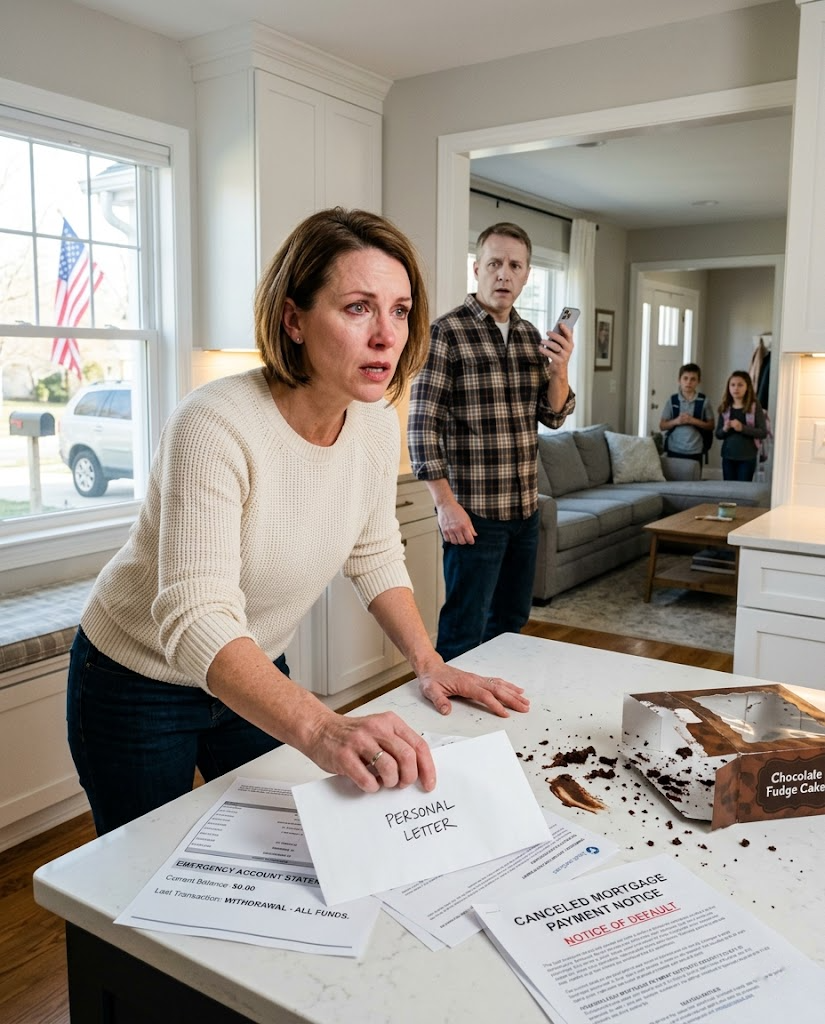
$467,000.
Almost half a million dollars.
I stared at it until my eyes burned.
Then I laughed once, and the sound scared me because it did not sound broken.
It sounded awake.
The next morning, I called the bank.
Then I drove there with my driver’s license, the account documents, and my nursing bag still in the passenger seat.
The teller recognized me.
She had seen me come in after overnight shifts, still in scrubs, moving money into accounts that never made my own life easier.
“I need to close a joint emergency account,” I said.
She looked at the screen.
Then she looked at me carefully.
“The deposits appear to be traceable to you,” she said. “We can process the withdrawal and closure request with your signature.”
So I signed.
My hand did not tremble.
After that, I canceled the automatic mortgage assistance scheduled for the first of the month.
I called the insurance office and removed myself from the payment arrangement Rebecca had never thanked me for maintaining.
I stopped the transfer I had set up for the twins’ summer camp.
I contacted my credit union and changed every account password.
I removed Rebecca as emergency contact from my hospital retirement paperwork.
At 1:26 p.m., I sat at my kitchen table and wrote the letter.
Rebecca,
You said the greatest gift would be if I died.
So I am granting your wish in the only way I can while still breathing.
The mother who paid your bills is gone.
The mother who covered your mortgage is gone.
The mother who kept an emergency account for a daughter who wished her dead is gone.
I listed the numbers.
Not to shame her.
To make the truth too solid for her to talk around.
College: $42,000.
Wedding: $35,000.
House down payment: $150,000.
Mortgage support: $16,000.
Twins’ braces: $4,000.
Emergency account: $20,000.
Estimated total support: $467,000.
Then I wrote the line that took me longest.
You are free now.
So am I.
I drove back to Rebecca’s house while she was out, because I still had the key she had given me years ago for babysitting emergencies.
I did not go upstairs.
I did not look through drawers.
I did not take anything that belonged to her.
I placed the letter on the kitchen table, under the small ceramic fruit bowl the twins had made at school, and left my key beside it.
Then I walked out of that house for the last time.
By morning, David called first.
Not Rebecca.
David.
His voice sounded thin and frightened.
“Linda,” he said, “what happened to the mortgage draft?”
In the background, I heard Rebecca’s voice.
“What do you mean canceled?”
Then silence.
A real silence this time.
Not the cruel silence from her living room.
A silence with math inside it.
“Tell Rebecca to read what I left her,” I said.
“Linda, please,” David whispered. “We didn’t know you were going to do this.”
“No,” I said. “You didn’t know I could.”
I hung up.
Rebecca called seven times.
Then twelve.
Then she texted.
Mom, this is insane.
Then: You’re punishing your grandchildren.
Then: You can’t just abandon family.
I looked at that last sentence for a long time.
Family.
The word people use when they want access without accountability.
I did not answer.
At 3:14 p.m., another message came through.
I read your letter.
Three dots appeared.
Then disappeared.
Then appeared again.
Finally, Rebecca sent one sentence.
Did you really close the account?
Not, I’m sorry.
Not, I didn’t mean it.
Not, Mom, are you okay?
Just the account.
That was when the last soft place in me hardened into something clean.
I typed back one word.
Yes.
She arrived at my apartment just before sunset.
I saw her through the peephole, standing in the hallway with David behind her, her face pale and angry, his face pale and scared.
She knocked hard enough to rattle the chain.
“Mom,” she said through the door. “Open up.”
I stood on my side of the door, barefoot on the old carpet, and felt something like grief move through me.
Then it passed.
I opened the door but kept the chain latched.
Rebecca stared at the gap as if insulted by it.
“You locked me out?” she demanded.
“No,” I said. “I locked myself in.”
Her eyes flashed.
“You can’t do this to us.”
I looked at my daughter, really looked at her, and for once I did not search her face for the little girl she had been.
That child was gone.
So was the mother who kept paying ransom to see her.
“I already did,” I said.
David lowered his head.
Rebecca’s mouth opened, then closed.
For the first time in years, she had no script ready.
I reached into the small bowl by my door and took out the spare key she had once kept here for herself.
I held it up where she could see it.
Her confidence drained out of her face.
“This belongs to my apartment,” I said. “And you don’t need it anymore.”
I dropped it into my pocket.
Then I closed the door.
I cried that night, of course I did.
Freedom is not painless just because it is right.
I cried for the baby who had needed me.
I cried for the teenager who had hugged me in a prom dress.
I cried for the woman on the porch holding a cake that nobody wanted.
But by morning, my apartment felt different.
Not bigger.
Mine.
I made coffee.
I opened the curtains.
Sunlight came across the old sofa, the same sofa where I had waited years for Rebecca’s calls and accepted crumbs of attention like they were meals.
My phone buzzed once.
I did not rush to it.
I finished my coffee first.
That was new.
Later, I called the retirement office and scheduled a meeting about my own future.
I called an old friend from the hospital and accepted lunch.
I bought a small chocolate cupcake from the grocery store bakery, not the expensive one, not Rebecca’s favorite.
Mine.
That evening, I placed it on a plate, lit one candle, and sat at my kitchen table while the flame flickered in the quiet.
For forty-five years, I had figured it out for Rebecca.
Now I was going to figure it out for myself.
And somewhere across town, my daughter finally understood what it meant to lose me.
Not because I stopped loving her.
Because I finally stopped funding the version of love that was killing me.