THEY SKIPPED MY HUSBAND AND CHILDREN’S FUNERAL FOR A BIRTHDAY PARTY — SIX MONTHS LATER, ONE HEADLINE MADE MY ENTIRE FAMILY PANIC
The day my husband and children died, my parents chose cake, candles, and dinner reservations over saying goodbye to them.
That sentence alone sounds fake, cruel, and impossible to believe.
Yet it happened.
And when the truth finally exploded online six months later, the same family who abandoned me suddenly remembered my phone number, my address, and my existence.
By then, it was already too late.
People often believe betrayal comes from enemies.
They are wrong.
The deepest betrayals come from people who raised you, hugged you, and spent your entire childhood convincing you that family always comes first.
Until one day, you realize those promises were never meant for you.
My name is Claire Miller.
Six months ago, I lost everything that mattered to me on Interstate 95 outside Richmond, Virginia.
My husband Ethan died instantly after a truck crossed the median and crushed our SUV.
My daughter Lily and my son Noah died beside him before paramedics even arrived.
Lily was seven years old.
She loved painting stars on every piece of paper she touched.
Noah was four.
He believed dinosaurs still existed somewhere underground.
Ethan was thirty-nine.
He still kissed my forehead every morning before work like we were teenagers in love.
I survived because I stayed home that morning with a migraine.
That fact has haunted me every day since the crash.
People say survivor’s guilt feels heavy.
They do not explain that it feels alive.
It follows you into showers, grocery stores, parking lots, and sleepless nights.
It whispers that maybe you should have died too.
At the hospital chapel, my hands were covered in gray ash from the accident site.
I could still smell smoke in my hair while calling my parents.
I expected shock.
I expected panic.
I expected my mother crying so hard she could barely speak.
I expected my father driving immediately toward me.
Instead, I heard music.
Laughter.
Glasses clinking together.
My sister Melissa was celebrating her birthday.
When my father answered, his voice sounded distracted, almost annoyed that I interrupted dinner.
That moment permanently changed something inside me.
“Dad,” I whispered. “There’s been an accident.”
He paused only briefly before asking what happened.
Not with fear.
Not with urgency.
Just curiosity.
I told him Ethan was dead.
Then I told him Lily and Noah were gone too.
Silence filled the line for several seconds.
For one fragile moment, I thought reality had finally reached him.
Then my mother grabbed the phone.
She sounded confused rather than devastated.
“What do you mean gone?” she asked.
Gone.
As if death required clarification.
I explained the accident again while trying not to collapse on the chapel floor.
I told them the funeral would be Friday.
Then I begged them to come.
I was not asking for money.
I was not asking for favors.
I was asking my parents to stand beside me while I buried my entire family.
Instead, my father sighed slowly into the phone.
The kind of sigh people use when discussing inconvenient traffic.
“Friday?” he repeated.
I said yes.
Then he delivered the sentence that still wakes me up at night.
“Claire, Friday is your sister’s birthday dinner. The reservation has been booked for weeks.”
At first, I honestly thought grief damaged my hearing.
Surely nobody could say that out loud.
Not after hearing three people died.
Not after hearing their grandchildren were gone forever.
But he continued speaking calmly.
Almost professionally.
“Today is your sister’s birthday,” he said. “We can’t come.”
No apology followed.
No hesitation.
The call ended seconds later.
I stared at my phone for nearly ten minutes afterward.
My brain refused to process what had happened.
The nurse beside me thought I was in shock from the accident.
She had no idea I was in shock from my own family.
At the funeral, rain soaked the cemetery so heavily that everyone’s shoes sank into mud.
It looked like the earth itself was trying to swallow us.
Three coffins stood side by side beneath gray skies.
One adult-sized coffin beside two tiny white ones.
No parent should ever witness that image.
No spouse should ever survive it.
Ethan’s mother held my arm the entire service because she feared I would collapse.
She was probably right.
His father cried openly without embarrassment.
The sound shattered every person in that church.
My side of the room remained nearly empty.
Rows of untouched seats stretched across the chapel.
No parents.
No sister.
No cousins.
Only my Aunt Ruth came after hearing about the tragedy from a neighbor instead of my family.
Even she looked horrified when she realized nobody else came.
People whispered during the reception afterward.
I heard them.
“Where are her parents?”
“Why isn’t her family here?”
“What kind of people miss this?”
I had no answers because none existed that made sense.
Three days later, my mother finally texted me.
Not to apologize.
Not to comfort me.
Instead, she wrote one sentence that permanently destroyed our relationship.
“Melissa felt hurt you didn’t call her on her birthday.”
I read that message at least twenty times.
Every version felt equally insane.
My children were dead.
My husband was buried.
And somehow my sister’s hurt feelings still mattered more.
That was the moment something inside me shut down completely.
Not exploded.
Not screamed.
Just quietly died.
For six months, I stopped answering their calls.
To be honest, there were not many anyway.
They sent vacation photos in family group chats like nothing happened.
Melissa posted engagement pictures smiling beside champagne towers and flower walls.
Nobody acknowledged the silence between us.
Nobody mentioned the funeral again.
It was as if my husband and children had simply disappeared from history.
During those months, I lived inside grief so heavy it physically changed me.
I lost nearly twenty pounds without trying.
I stopped sleeping normally.
I stopped watching television because every happy family scene felt violent.
At grocery stores, seeing parents with children made me leave halfway through shopping.
I once cried in a cereal aisle for forty minutes.
Yet something unexpected also happened during that darkness.
I became frighteningly clear about people.
When trauma strips your life apart, masks disappear quickly.
You learn exactly who values you and who never did.
Ethan’s parents checked on me daily despite mourning their own son and grandchildren.
Friends brought food even when I could not eat.
Neighbors cut my lawn for months without asking.
Strangers donated to memorial charities for Lily and Noah.
Meanwhile, my own parents remained emotionally absent.
Not once did they drive to my house simply to hold me.
Not once did Melissa apologize.
Instead, she complained online that “family drama” was ruining her engagement season.
That phrase spread through relatives faster than the truth.
Apparently my grief had become inconvenient branding for wedding photos.
Then came January.
Everything changed on a freezing Tuesday morning.
A legal settlement involving the trucking company finally concluded after months of investigation.
The driver had violated federal sleep regulations repeatedly before the crash.
The company covered it up until investigators uncovered falsified records.
The scandal exploded across regional news overnight.
Because I was the surviving spouse and parent, the settlement totaled 18.7 million dollars.
Most headlines focused on the money.
But another detail captured public attention immediately.
I announced the creation of the Lily and Noah Foundation, dedicated to highway child safety awareness and stricter trucking regulations.
That announcement spread rapidly online.
Suddenly, strangers praised my strength.
Interviews appeared everywhere.
Photos of Ethan and the children circulated across social media platforms.
People shared our story thousands of times within hours.
Then my family discovered the headline.
Everything changed instantly.
By noon, my phone was exploding nonstop.
My father called seventeen times in three hours.
Melissa suddenly texted paragraphs about “misunderstandings” and “healing together as a family.”
My mother claimed they always loved me deeply.
It would almost be funny if it were not so disgusting.
For six months, silence.
Then millions of dollars appeared, and suddenly I mattered again.
But the money was not even the real reason they panicked.
The truth was much worse.
Three weeks earlier, before the settlement became public, I had finalized something privately with my lawyers.
Something permanent.
I removed every member of my family from every legal document connected to me.
Every inheritance.
Every emergency contact.
Every medical decision.
Every trust.
Every future right to access anything tied to my life.
I even legally transferred family heirlooms from my side to Ethan’s parents because they were the only people who actually showed humanity after the tragedy.
That decision enraged my relatives most.
My grandmother’s jewelry collection had apparently mattered more than my children’s funeral.
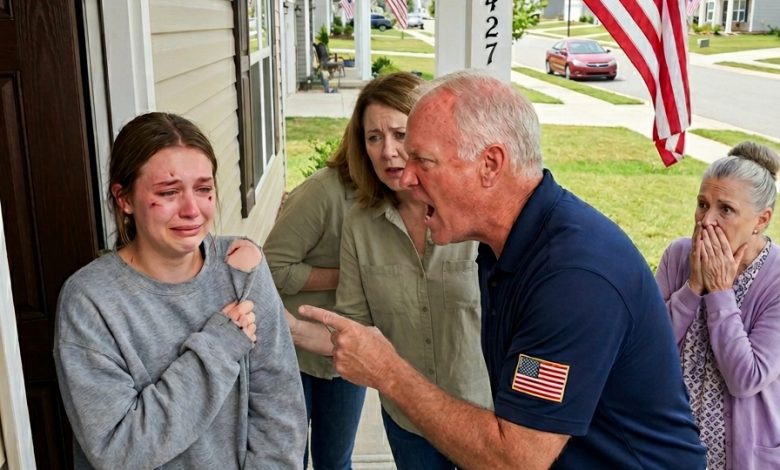
By evening, my father arrived outside my house unannounced.
He pounded on the door hard enough to scare my neighbors.
When I opened it slightly, he looked furious rather than remorseful.
That detail still amazes me.
Not sadness.
Not shame.
Anger.
“How could you cut us out like this?” he demanded immediately.
No hello.
No apology.
Just outrage over consequences.
I remember staring at him beneath the porch light while snow drifted quietly around us.
For the first time in my life, I truly saw him clearly.
Not as my father.
Just as a man.
A selfish, emotionally hollow man terrified of losing access to someone he never valued properly.
“You skipped their funeral,” I replied quietly.
He rolled his eyes before answering.
Actually rolled his eyes.
“We already explained that situation,” he snapped. “Melissa only gets one birthday every year.”
I laughed.
Not because anything was funny.
Because insanity sometimes becomes too massive for tears.
“My children only had one funeral,” I said.
That sentence finally silenced him.
For maybe five seconds, he looked uncertain.
Then he tried another strategy immediately.
“You’re overreacting because of grief,” he said. “Families make mistakes.”
Mistakes.
People accidentally forget milk at grocery stores.
They accidentally miss phone calls.
They do not accidentally abandon their daughter while she buries her husband and children.
That is not a mistake.
That is revelation.
I asked him one question before closing the door forever.
“If Melissa died tomorrow, would you skip her funeral for my birthday dinner?”
His silence answered everything.
Because we both already knew the truth.
Melissa had always been the center of my family’s universe.
I was merely background decoration orbiting around her importance.
She was the golden child.
I was the reliable child.
She received attention.
I received expectations.
When she forgot responsibilities, people laughed affectionately.
When I struggled, people criticized my attitude.
Even during childhood birthdays, Melissa blew out candles on my cakes because she “felt left out.”
My parents allowed it every time.
At sixteen, I won a statewide writing competition.
My father skipped the ceremony because Melissa had dance practice.
At my college graduation, my mother spent the entire dinner discussing Melissa’s recent breakup instead of my degree.
I learned early not to expect much.
Still, some part of me believed tragedy would finally change things.
Surely death would override favoritism.
I was wrong.
After my father left that night, Melissa tried contacting me publicly online.
That was when the real circus began.
She posted emotional messages about “family reconciliation” for thousands of followers.
Strangers flooded comments accusing me of cruelty for cutting off grieving parents.
Nobody knew the truth yet.
My family deliberately avoided mentioning the funeral.
So I posted one screenshot.
Just one.
My father’s text confirming they would miss the funeral because of Melissa’s birthday dinner reservation.
The internet exploded within hours.
People who previously defended my family suddenly turned against them violently.
Comment sections became war zones.
Major accounts reposted the screenshot with captions calling it the coldest parental rejection ever seen online.
Millions viewed it within two days.
Melissa lost sponsorship deals almost immediately because brands feared backlash.
Her engagement announcement disappeared beneath waves of criticism.
My mother deactivated her social media after receiving thousands of furious messages from strangers.
My father blamed me for all of it.
Not himself.
Not his choices.
Me.
That reaction revealed another painful truth about toxic families.
They do not fear hurting you.
They fear exposure.
For years, my family maintained an image of closeness, generosity, and perfect traditions.
The funeral incident shattered that illusion publicly.
People suddenly noticed patterns hidden beneath the surface.
Relatives began contacting me privately with stories of similar behavior.
An uncle admitted my parents skipped his wife’s surgery years earlier because Melissa wanted help shopping.
A cousin confessed she stopped visiting after constant favoritism exhausted her emotionally.
The cracks had existed forever.
My tragedy simply exposed them permanently.
Meanwhile, the foundation grew faster than anyone expected.
Parents across America shared stories about dangerous trucking practices and highway accidents.
Donations poured in from strangers who connected deeply with Lily and Noah’s story.
Their names reached people I would never meet.
That became my purpose.
Not revenge.
Not money.
Purpose.
If my children’s deaths could force conversations about safety, maybe their lives would continue creating change somehow.
That belief kept me breathing during unbearable nights.
One interview particularly changed public conversation surrounding my story.
The reporter asked whether I planned forgiving my family eventually.
The studio became silent waiting for my answer.
Millions later watched the clip online repeatedly.
I said something many people considered controversial afterward.
“Forgiveness does not require reconnecting with people who destroyed you,” I said calmly.
That sentence triggered enormous debate online.
Some called me empowering.
Others called me bitter and cruel.
But survivors of toxic families understood exactly what I meant.
Society pressures people endlessly to forgive parents no matter what happens.
Especially mothers and fathers.
People treat blood relationships like automatic lifetime immunity from accountability.
I reject that completely now.
Being related biologically means nothing without love, loyalty, and humanity behind it.
DNA alone cannot create family.
My real family proved themselves at the funeral.
The people who stayed.
The people who cried beside me.
The people who showed up.
Months later, Melissa attempted meeting me privately at a café downtown.
Against my better judgment, I agreed.
Part of me still wanted answers.
Part of me still hoped she might finally understand the damage done.
She arrived wearing designer clothes and oversized sunglasses despite cloudy weather.
Even then, appearance mattered more than reality.
The first thing she said was unbelievable.
“You embarrassed the family online,” she whispered angrily.
Not “I’m sorry.”
Not “I miss Lily and Noah.”
Just concern about embarrassment.
I stared at her across the table for nearly thirty seconds before responding.
The café noise disappeared around us.
“You skipped their funeral for a steak dinner,” I said quietly. “You embarrassed yourselves.”
She immediately became defensive.
According to Melissa, the dinner reservation was expensive, many guests already confirmed attendance, and canceling would have been difficult socially.
Socially difficult.
Imagine saying that while discussing dead children.
Then she said something even worse.
“You can always hold another memorial later,” she explained carefully. “But birthdays happen on the actual day.”
I truly believe that was the exact moment any remaining emotional connection between us finally died permanently.
Some relationships cannot survive certain sentences.
I stood immediately to leave.
Melissa grabbed my wrist before I walked away.
“You owe this family another chance,” she insisted.
No.
I did not owe them anything anymore.
Children owe parents respect when parents behave respectfully.
Love should never function like lifelong emotional blackmail.
I removed her hand calmly before leaving the café forever.
That was the last time I saw my sister.
Since then, public fascination with my story has continued spreading online unexpectedly.
Podcasts debated whether my reaction was justified.
Psychologists discussed narcissistic family dynamics using my situation anonymously as an example.
Comment sections filled with people sharing painful personal experiences.
One message especially stayed with me.
A woman wrote that she attended her son’s graduation alone because her parents prioritized her sister’s vacation photoshoot instead.
Another man confessed his family ignored his cancer diagnosis because his brother had relationship problems simultaneously.
The patterns felt horrifyingly familiar.
That is why this story resonates so strongly online.
People recognize themselves inside it.
Not necessarily through funerals or headlines or million-dollar settlements.
But through emotional abandonment disguised as family normalcy.
Many people spend years minimizing their pain because someone else always mattered more loudly.
Then one breaking point changes everything forever.
Mine happened beside three coffins beneath cold rain in Virginia.
Today, my house remains quiet.
Too quiet sometimes.
Lily’s drawings still hang on the refrigerator because removing them feels unbearable.
Noah’s toy dinosaurs still sit beside his bed untouched.
Ethan’s jackets remain inside our closet carrying faint traces of his cologne.
Grief preserves ordinary objects like sacred artifacts.
But despite the loneliness, one truth gives me peace now.
I no longer beg people to love me properly.
That chapter ended forever.
The headline that terrified my family was never really about money.
It was about losing control.
They lost access to the daughter they ignored repeatedly because they assumed she would tolerate anything forever.
They were wrong.
Sometimes the quietest person in the family eventually becomes the one who walks away permanently.
And when that happens, toxic people panic.
Not because they suddenly care.
Because consequences finally arrived.
My parents still tell relatives I “changed” after the accident.
They are correct about one thing.
I did change.
Trauma forced me to stop confusing loyalty with self-destruction.
That lesson cost me everything.
If there is one reason this story continues spreading online, it is probably this uncomfortable reality.
Many families function conditionally, not lovingly.
The moment you stop accepting emotional crumbs, people accuse you of cruelty instead of examining their behavior.
Boundaries expose relationships brutally fast.
Would I trade every dollar from that settlement to hear Lily laugh again?
Immediately.
Without hesitation.
Would I trade everything just to watch Noah run into my arms one more time?
Every single cent.
Would I give away the foundation, the interviews, and the public attention to hear Ethan say goodnight again?
Absolutely.
Money never healed me.
It simply revealed people more clearly.
And perhaps that is the cruelest truth hidden beneath this entire story.
Tragedy does not build character.
It exposes character already there.