

If you have yet to find an outfit for any upcoming holiday festivities, have no fear: Ashley Graham’s sheer dress is holiday dressing at it’s finest, and it’s bound to give you some inspo. While Graham’s attire comes from fashion designer Georgine, there are similar styles that just so happen to be affordable so you can rock the look, too.
On Dec. 9 Graham was spotted out and about in New York City looking absolutely gorgeous, as per usual. The 28-year-old model and entrepreneur was wearing a sheer polka dot bodycon dress, which she paired with a black bodysuit underneath. She further accessorized her look with minimal jewelry, nude nails, pointed toe heels, and styled her hair in bombshell waves.
Graham gave us a close up of her outfit on Instagram. She captioned the image, “Feelin’ myself with @complexhustle..interview about my grind coming soon✌”
According to Complex Hustle’s Instagram, Graham was being interviewed by the YouTube Channel about the “upcoming season of #ANTM and her hustle.”
Here’s a look at Graham’s gorgeous dress:
Later in the day, Graham attended the ANTM premiere party in NYC in yet another sheer dress. A holiday ‘it’ dress, perhaps? While Graham’s dress was sheer like her polka dot number she wore earlier in the day, it was of a dressier variety being that is was full-length.

Isn’t it incredible? If you’re not sure what to wear this holiday season, try a festive and sheer polka dot print like Graham’s. Need some inspo? Check out the options below.
1. Sheer Sleeves
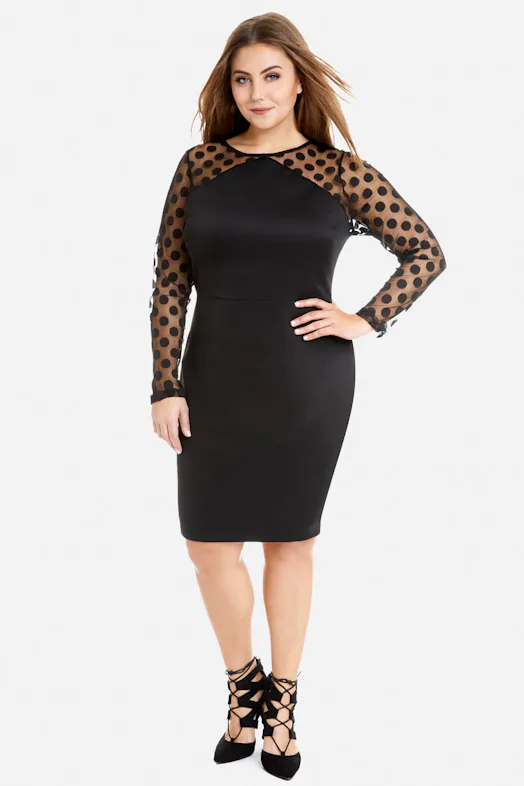
Sharlene Swiss Dot Dress, $29, Fashion To Figure
No need for a bodysuit, this sheer sleeved polka dot dress is both covered up in all the right places.
2. Velvet
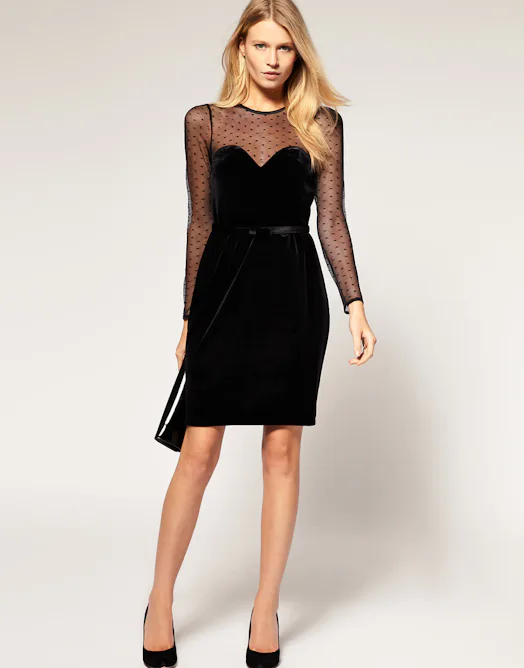
Oasis Velvet Dress With Sheer Top, $49, ASOS
Opt for a multi-textured dress for the holidays like this mesh and velvet number above.
3. Swing Style
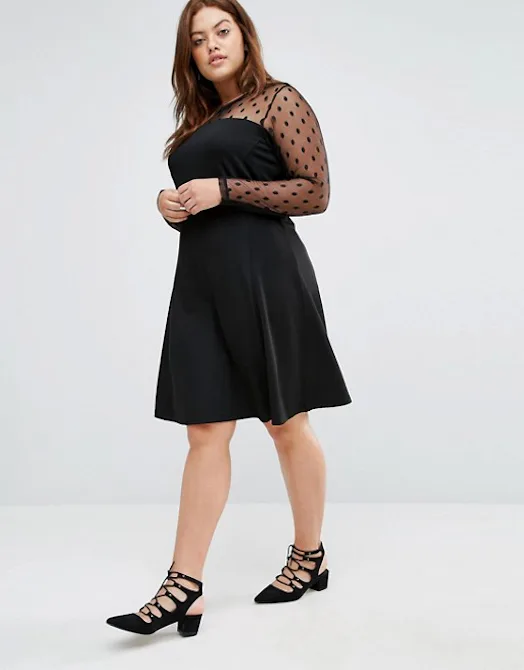
Junarose Swing Dress With Spot Mesh Insert, $68, ASOS
Dress this frock up for night with a pair of metallic heels and a glimmering choker.
4. Cut Out
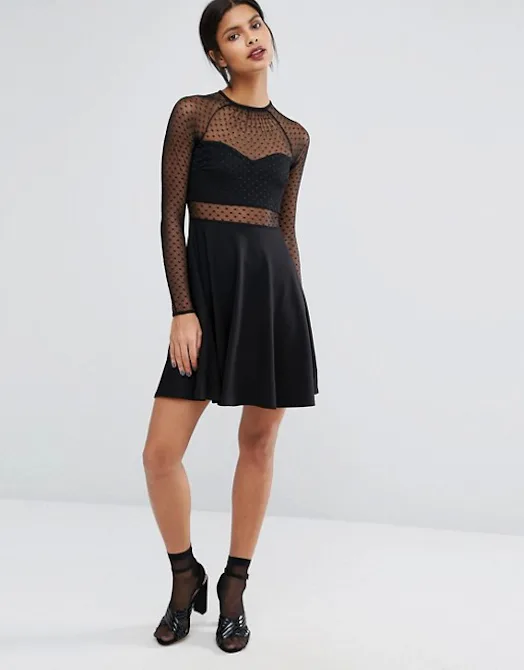
River Island Skate Dress With Polka Dot Mesh, $49, ASOS
Strategic cut outs make this dress an ideal choice for a fun soiree on NYE.
5. Off The Shoulder

Asos Curve Off Shoulder Midi Bodycon In Polka Dot, $38, ASOS
While this dress may not be sheer, it’s festive print and off the shoulder style make it a must for holiday parties.
6. Fit And Flare

Asos Skater Dress With Spot Mesh Back Detail, $34, ASOS
Pair this skater style frock with ankle boots and a red lip for a comfortable yet fashionable holiday outfit.
7. Midi
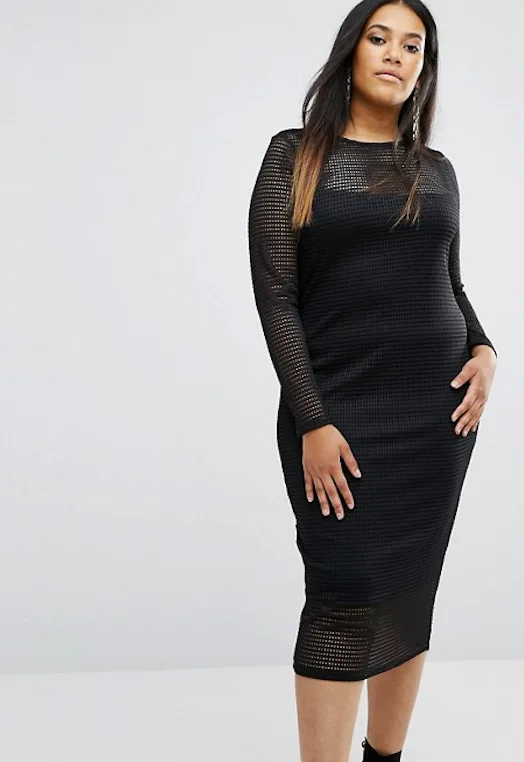
River Island Mesh Insert Bodycon Midi Dress, $53, ASOS
The perfect LBD, no?
Channel your inner Graham this holiday season in a polka dot frock — it’s a look that perfectly tows the line between low key and high drama, kind of like Graham herself.
Images: Courtesy Brands
Life
Dismissed For Years As “Just Tired,” These Women Are Changing The Conversation Around Narcolepsy Type 1
Being “just tired” can mask a serious neurological condition hiding in plain sight.
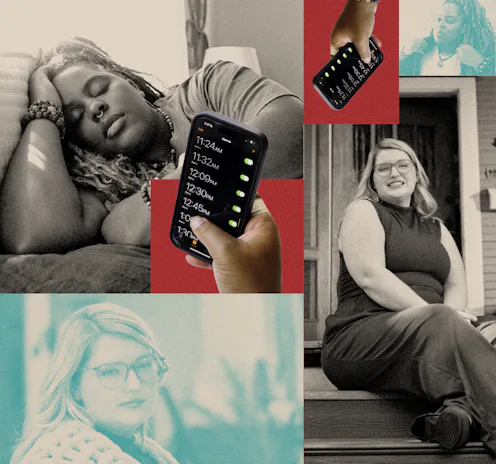
Imagine going on a basketball recruiting visit to your dream college, only to fall asleep during an important meeting with the associate athletic director. Believe it or not, that’s exactly what happened to Justice*, a now 30-year-old woman who lives with narcolepsy type 1 (NT1).
Justice is not alone. Tara*, a 29-year-old pediatric sleep coach, also lives with NT1, a chronic neurological sleep disorder that is often misunderstood or misdiagnosed as “just being tired.”
NT1 affects the brain’s ability to regulate sleep and wakefulness, which is why its symptoms are so often mistaken for personality traits, mental health issues, or a lack of discipline.
The reality is that NT1 is about way more than just feeling sleepy. It’s a neurological condition that’s tied to a loss of orexin. Orexin is a chemical in the brain that helps to regulate the sleep-wake cycle and autonomic functions in the brain. NT1 symptoms include excessive daytime sleepiness, cataplexy (which is a sudden loss of muscle tone triggered by strong emotion), and disrupted nighttime sleep, among others. Even while experiencing these symptoms, it can take up to 10 years for some people to finally be diagnosed with NT1. Unfortunately, it’s just another illness that often goes undiagnosed or misdiagnosed in women for years. In fact, research suggests that women with NT1 often wait significantly longer than men to receive a diagnosis, even when their symptoms are just as severe.
Because it is a rare disease, information can be scarce. Educational resources like The What It Takes** website featuring the experiences of Justice and Tara help explain what NT1 really is, including the science behind orexin, and the impact of symptoms on daily life. Individual experiences can vary, so don’t forget to talk to your doctor.
You’ll be happy to know that Justice did, in fact, get the sports scholarship at her dream college, but it wasn’t without reservations from the administration. The staff encouraged Justice to get tested for NT1, and after she was diagnosed at age 18, her life changed in many ways.

Once the demands of academics and Division I basketball collided, her “sleepiness” became impossible to ignore. Professors docked her for falling asleep during lectures, and she found herself constantly fighting to stay awake during practices, meetings, and travel days, too. “Anytime we were traveling, waiting, or even just sitting still, I was asleep,” she says. “Sometimes not by choice.”
Getting diagnosed brought relief and fear at the same time. “It gave me a rhyme and a reason for what I was experiencing,” Justice explains. “It gave me back control.”
Balancing NT1 with college athletics forced Justice to rethink resilience. Instead of pushing harder, she learned to build a routine that worked with her body. This included scheduled naps, understanding her triggers, and being honest (with herself and with others) about her limits. “Routine was the biggest game changer for me,” she says.
Like Justice, Tara spent years feeling exhausted in ways that never really seemed normal. At her worst, she felt like she could sleep around the clock and never feel rested. Tara officially received her NT1 diagnosis at age 22, after years of being told her excessive sleepiness and brain fog were caused by mental health or neurological conditions that didn’t fully explain her symptoms.

Unfortunately, she was being treated for conditions she didn’t have, while the underlying condition (NT1) went completely unnoticed. Over time, those misdiagnoses began to take a toll on her mental health. Tara internalized the idea that she was lazy or “faking it,” which really affected her self-esteem, relationships, and ability to trust her own body. When she finally received the NT1 diagnosis, the relief felt overwhelming. “It wasn’t just in my head,” she said.
Although Justice’s and Tara’s journeys might look different on the surface, they share a common thread — NT1 feels less isolating when you realize you’re not alone.
Today, both Justice and Tara are open about their NT1 diagnoses and find every opportunity to raise awareness about NT1 and challenge common misconceptions. Justice shares what life with NT1 really looks like on social media, from daily exhaustion to unexpected sleep episodes. “I could’ve really used someone like myself when I was first diagnosed,” Justice says. “So I try to be that person for someone else.” Tara focuses on education and advocacy, emphasizing that no two people experience narcolepsy the same way. For both women, finding community, whether online, through support groups, or in advocacy spaces, helped ease the isolation and made them feel understood.
Years of being dismissed taught them the power of self-advocacy — to trust their instincts, ask better questions, and push for answers when something felt off. Reframing NT1 as a neurological condition, rather than a personal failing, was a turning point for both of them. “There’s a reason behind it, and it’s not my fault,” Tara said.
Justice and Tara’s message to others living with NT1 is simple but powerful: Listen to your body, and don’t stop advocating until you feel heard.
Remember, if you have questions or concerns about NT1, talk to your doctor.
*Justice and Tara are paid contributors for Takeda Pharmaceuticals. Last names withheld to protect personal privacy.
**What It Takes is developed and brought to you by Takeda Pharmaceuticals. Learn more about NT1 at The What It Takes website.
©2026 Takeda Pharmaceuticals U.S.A., Inc. All rights reserved. Taked